Puzzles in Spanish are riddles, word games, logic challenges, and brain teasers written in Spanish. They help learners practice vocabulary, understand sentence structure, and enjoy problem-solving. This collection includes easy and challenging puzzles with English translations, hints, answers, and explanations for students, families, and adults.
Learning Spanish doesn’t have to mean memorizing vocabulary lists or completing grammar exercises. Puzzles in Spanish make practice more enjoyable by turning familiar words, everyday objects, numbers, and clever clues into little challenges.
Whether you’re a beginner learning words such as agua (water) and libro (book), a student preparing for class, or an experienced learner who enjoys wordplay, these puzzles offer different ways to think in Spanish.
This collection includes Spanish riddles (adivinanzas), vocabulary challenges, word puzzles, number problems, and logic questions. Each puzzle includes an English translation where useful, along with an answer and a short explanation. Some rely on familiar objects, while others reward careful reading or knowledge of Spanish spelling.
How to play: Read each puzzle in Spanish first, try to solve it without looking at the answer, and then use the English translation or hint if you get stuck. For language practice, say your answer aloud and make a sentence using the new vocabulary.
What Are Puzzles in Spanish?
Puzzles in Spanish are activities that challenge a person’s vocabulary, reading comprehension, logic, observation, or mathematical reasoning using the Spanish language.
Several common Spanish terms describe different kinds of puzzles:
| Spanish term | English meaning | Example |
| Adivinanza | Riddle | Guessing an object from clues |
| Acertijo | Puzzle or brain teaser | Solving a tricky question |
| Crucigrama | Crossword | Filling a grid using written clues |
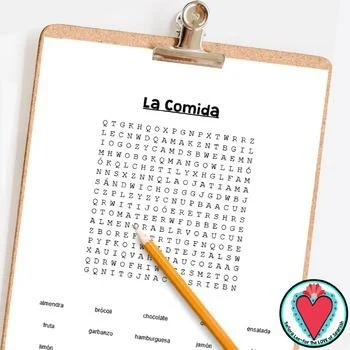
| Sopa de letras | Word search | Finding hidden Spanish words |
| Juego de palabras | Word game or wordplay | Discovering a double meaning |
| Problema de lógica | Logic problem | Working out a sequence of clues |
| Rompecabezas | Puzzle; often a jigsaw puzzle | Putting pieces together |
The exact word used for a puzzle can vary with context and region. For example, rompecabezas can refer to a physical jigsaw puzzle or to a problem that requires careful thought.
The puzzles below combine several formats so readers can practice more than one skill.
Easy Spanish Puzzles for Beginners
These beginner puzzles use common words, simple clues, and familiar objects. Try to understand the Spanish question before reading the translation.
Puzzle 1 The Book
Difficulty: Easy
Question: Tengo muchas hojas, pero no soy un árbol. Cuento historias, pero no tengo voz. ¿Qué soy?
English: I have many leaves, but I’m not a tree. I tell stories, but I have no voice. What am I?
Hint: You can read me.
Answer: Un libro a book.
Why: The word hojas can mean leaves or sheets/pages. A book has pages and can tell a story through its written words.
Puzzle 2 The Clock
Difficulty: Easy
Question: Tengo números y dos manos, pero no puedo aplaudir. Te digo la hora sin hablar. ¿Qué soy?
English: I have numbers and two hands, but I cannot clap. I tell you the time without speaking. What am I?
Hint: You might hang me on a wall.
Answer: Un reloj a clock.
Why: A traditional clock has numbers and hands that indicate the time.
Puzzle 3 The Pencil
Difficulty: Easy
Question: Tengo una punta y dejo palabras sobre el papel. Cuando me gastas, puedes sacarme punta otra vez. ¿Qué soy?
English: I have a point and leave words on paper. When I wear down, you can sharpen me again. What am I?
Hint: Students often keep one in a pencil case.
Answer: Un lápiz a pencil.
Why: A pencil writes with its graphite tip and can be sharpened when the tip becomes blunt.
Puzzle 4 The Mirror
Difficulty: Easy
Question: Te miro cuando tú me miras. Copio tus movimientos, pero nunca me muevo por mi cuenta. ¿Qué soy?
English: I look at you when you look at me. I copy your movements, but I never move by myself. What am I?
Hint: You might use me before leaving home.
Answer: Un espejo a mirror.
Why: A mirror reflects your image and movements.
Puzzle 5 The Rainbow
Difficulty: Easy
Question: Después de la lluvia, puedo aparecer en el cielo con muchos colores. No soy una bandera ni un arco de piedra. ¿Qué soy?
English: After the rain, I may appear in the sky with many colors. I’m not a flag or a stone arch. What am I?
Hint: Look for me when sunlight meets water droplets.
Answer: Un arcoíris a rainbow.
Why: A rainbow is a natural optical phenomenon that displays a spectrum of colors.
Puzzle 6 The Candle
Difficulty: Easy
Question: Tengo un cuerpo de cera y una pequeña llama en la cabeza. Doy luz, pero desaparezco poco a poco mientras trabajo. ¿Qué soy?
English: I have a body of wax and a small flame on my head. I give light, but gradually disappear while I work. What am I?
Hint: You might light me during a power outage.
Answer: Una vela a candle.
Why: A burning candle consumes its wax as it produces light and heat.
Puzzle 7 The Key
Difficulty: Easy
Question: Puedo tener dientes, pero no como. Entro en una cerradura y ayudo a abrir una puerta. ¿Qué soy?
English: I can have teeth, but I don’t eat. I fit into a lock and help open a door. What am I?
Hint: You may carry me on a key ring.
Answer: Una llave a key.
Why: The teeth of a key are shaped to operate a matching lock.
Puzzle 8 The Window
Difficulty: Easy
Question: Tengo un marco y puedo mostrarte el exterior. Dejo pasar la luz cuando estoy limpia, pero no soy una pantalla. ¿Qué soy?
English: I have a frame and can show you the outside. I let light through when I’m clean, but I’m not a screen. What am I?
Hint: You might open me to let fresh air inside.
Answer: Una ventana a window.
Why: A window allows people to see outside and, depending on its design, lets in light and air.
Puzzle 9 The Banana
Difficulty: Easy
Question: Soy una fruta que suele ser amarilla cuando madura. Tengo una cáscara que se quita antes de comerme. ¿Qué soy?
English: I’m a fruit that is usually yellow when ripe. I have a peel that is removed before eating. What am I?
Hint: Monkeys are often pictured eating me.
Answer: Un plátano a banana.
Why: Plátano is commonly used for banana in Spain and many other Spanish-speaking contexts; banana is also used in various regions.
Puzzle 10 The Door
Difficulty: Easy
Question: Estoy en una pared y puedo abrirme o cerrarme. Me atraviesas para entrar en una habitación. ¿Qué soy?
English: I’m in a wall and can open or close. You pass through me to enter a room. What am I?
Hint: I may have a handle.
Answer: Una puerta a door.
Why: A door provides an opening for entering or leaving a building or room.
Spanish Riddles With Answers (Adivinanzas)
Traditional adivinanzas often use rhyme, comparisons, and double meanings. These next puzzles include original descriptive riddles and wordplay challenges. Some are easier to solve by listening to the Spanish aloud.
Puzzle 11 The Moon
Difficulty: Easy
Question: De noche me ves en el cielo; a veces parezco una sonrisa y otras, un círculo entero. ¿Qué soy?
English: At night you see me in the sky; sometimes I look like a smile and other times like a complete circle. What am I?
Hint: I change my apparent shape throughout the month.
Answer: La luna the moon.
Why: The moon’s visible illuminated portion changes during its phases, from a thin crescent to a full moon.
Puzzle 12 The River
Difficulty: Easy
Question: No tengo pies, pero avanzo sin parar. No tengo boca, pero puedo sonar al pasar. ¿Qué soy?
English: I have no feet, but I keep moving forward. I have no mouth, but I can make a sound as I pass. What am I?
Hint: I carry water toward a lake, sea, or another river.
Answer: Un río a river.
Why: A flowing river moves downhill and can make sounds as its water travels over rocks and uneven ground.
Puzzle 13 The Toothbrush
Difficulty: Easy
Question: Tengo muchos pelos, pero no soy un animal. Limpio tus dientes, pero nunca voy al dentista por mí mismo. ¿Qué soy?
English: I have many hairs, but I’m not an animal. I clean your teeth, but I never visit the dentist myself. What am I?
Hint: You use me with toothpaste.
Answer: Un cepillo de dientes a toothbrush.
Why: Its bristles clean the surfaces of teeth.
Puzzle 14 The Umbrella
Difficulty: Easy
Question: Me abro sobre tu cabeza cuando cae la lluvia. No soy un techo, porque puedes llevarme contigo. ¿Qué soy?
English: I open above your head when rain falls. I’m not a roof because you can carry me with you. What am I?
Hint: You may fold me and put me in a bag.
Answer: Un paraguas an umbrella.
Why: An umbrella provides portable protection from rain.
Puzzle 15 The Spider
Difficulty: Medium
Question: Tengo ocho patas y fabrico una red, pero no soy pescador ni tejedor humano. ¿Qué soy?
English: I have eight legs and make a web, but I’m neither a fisherman nor a human weaver. What am I?
Hint: I may catch insects in my web.
Answer: Una araña a spider.
Why: Spiders are arachnids, typically with eight legs, and many species spin silk webs.
Puzzle 16 The Snow
Difficulty: Easy
Question: Caigo del cielo cuando hace mucho frío. Cubro el suelo de blanco, pero no soy pintura ni harina. ¿Qué soy?
English: I fall from the sky when it is very cold. I cover the ground in white, but I’m neither paint nor flour. What am I?
Hint: You might build a snowman with me.
Answer: La nieve snow.
Why: Snow forms when ice crystals grow in clouds and fall to the ground.
Puzzle 17 The Fish
Difficulty: Easy
Question: Vivo en el agua y me desplazo con aletas. No tengo piernas para caminar ni alas para volar. ¿Qué soy?
English: I live in water and move with fins. I have no legs for walking or wings for flying. What am I?
Hint: Many people see me swimming in an aquarium.
Answer: Un pez a fish.
Why: Fish use fins to move and maintain stability in water.
Puzzle 18 The Telephone
Difficulty: Easy
Question: Puedo llevar una voz desde una ciudad hasta otra. No tengo garganta, pero ayudo a las personas a conversar. ¿Qué soy?
English: I can carry a voice from one city to another. I have no throat, but I help people talk.
Hint: You may carry me in your pocket.
Answer: Un teléfono a telephone.
Why: A telephone transmits voice or other communication signals between people.
Puzzle 19 The Mountain
Difficulty: Medium
Question: Me elevo sobre el paisaje, pero nunca camino. Puedo tener nieve en la cima y caminos en mis laderas. ¿Qué soy?
English: I rise above the landscape, but I never walk. I may have snow on my summit and paths along my slopes. What am I?
Hint: Climbers often try to reach my top.
Answer: Una montaña a mountain.
Why: A mountain is a natural elevation of the Earth’s surface.
Puzzle 20 The Echo
Difficulty: Medium
Question: Repito lo que dices sin entender tus palabras. Aparezco después de tu voz, especialmente en ciertos lugares. ¿Qué soy?
English: I repeat what you say without understanding your words. I appear after your voice, especially in certain places. What am I?
Hint: Try shouting near a large cliff or in an empty canyon.
Answer: Un eco an echo.
Why: An echo is sound reflected back to a listener. The delay and clarity depend on the surroundings.
Spanish Word Puzzles and Vocabulary Challenges
Word puzzles help learners connect spelling, meaning, and sentence structure. These challenges range from basic vocabulary to small language tricks.
Puzzle 21 Unscramble the Spanish Word
Difficulty: Easy
Question: Rearrange these letters to name an animal that says miau: TOGA.
English: What animal is associated with the sound “meow”?
Hint: The answer has four letters in Spanish.
Answer: GATO cat.
Why: Rearranging T, O, G, A gives G, A, T, O. Gato is the Spanish word for a male cat or a cat generally.
Puzzle 22 Find the Missing Letter
Difficulty: Easy
Question: Complete the Spanish word for a house: C _ S A.
Hint: The missing letter comes after C.
Answer: CASA house.
Why: The missing letter is A, forming the word casa.
Puzzle 23 Which Word Does Not Belong?
Difficulty: Easy
Question: Which word is different from the others: manzana, pera, zanahoria, plátano?
English: Apple, pear, carrot, banana.
Hint: Think about which item is generally classified as a vegetable in everyday food categories.
Answer: Zanahoria carrot.
Why: The other three are fruits. A carrot is a root vegetable. This puzzle uses everyday food categories rather than a botanical classification.
Puzzle 24 Match the Opposites
Difficulty: Easy
Question: Match each Spanish word with its opposite.
- Grande
- Frío
- Rápido
- Día
Options: noche, pequeño, lento, caliente.
Hint: Think of size, temperature, speed, and time.
Answer:
- Grande → pequeño (big → small)
- Frío → caliente (cold → hot)
- Rápido → lento (fast → slow)
- Día → noche (day → night)
Why: These pairs express common contrasts in Spanish vocabulary.
Puzzle 25 Complete the Sentence
Difficulty: Easy
Question: Fill in the blank with the correct Spanish word: Por la noche, veo las estrellas en el ____.
Options: cielo, zapato, cuchara.
English: At night, I see the stars in the ____.
Hint: Stars appear overhead.
Answer: Cielo sky.
Why: The complete sentence is Por la noche, veo las estrellas en el cielo.
Puzzle 26 Discover the Hidden Word
Difficulty: Medium
Question: Which Spanish word meaning “pear” is hidden in the phrase espera when you split it into two parts?
Hint: Try separating the opening letters from the ending.
Answer: Pera pear.
Why: Espera can be separated visually into es + pera. The phrase si quieres que te lo diga, espera (“if you want me to tell you, wait”) is a traditional Spanish riddle trick. This is a written wordplay clue, not a rule for splitting words in ordinary Spanish.
Puzzle 27 What Does Banco Mean?
Difficulty: Medium
Question: The word banco can refer to two different things. Name both meanings in English.
Hint: One may hold your money; the other may be found in a park.
Answer: A bank and a bench.
Why: Banco is a Spanish word with multiple meanings. The surrounding sentence helps the reader understand which one is intended.
Puzzle 28 Build a Correct Sentence
Difficulty: Medium
Question: Put these words in a natural order: perro / el / jardín / corre / en / el.
Hint: Start with the subject and follow it with the verb.
Answer: El perro corre en el jardín.
English: The dog runs in the garden.
Why: The sentence follows a common Spanish subject–verb–complement order: “The dog” + “runs” + “in the garden.”
Puzzle 29 Singular or Plural?
Difficulty: Easy
Question: What is the usual plural of flor (flower)?
Options: flores, flors, floros.
Hint: Many Spanish nouns ending in a consonant add -es.
Answer: Flores flowers.
Why: The plural of flor is flores. Spanish spelling and plural rules vary by word ending, but this is a standard pattern for many consonant-ending nouns.
Puzzle 30 Find the Correct Translation
Difficulty: Easy
Question: Which Spanish word means “window”?
Options: ventana, vestido, viernes.
Hint: It begins with V and is part of a house.
Answer: Ventana window.
Why: Vestido means dress, and viernes means Friday. Ventana means window.
Spanish Logic Puzzles and Brain Teasers
These puzzles focus on deduction, sequences, and careful reading. You don’t need advanced Spanish to solve most of them, but understanding the key vocabulary will help.
Puzzle 31 The Number Sequence
Difficulty: Easy
Question: ¿Qué número sigue: 2, 4, 6, 8, __?
English: What number comes next?
Hint: The numbers increase by the same amount each time.
Answer: 10.
Why: Each number increases by 2.
Puzzle 32 The Three Apples
Difficulty: Easy
Question: Ana tiene tres manzanas. Le da una a Luis. ¿Cuántas manzanas le quedan a Ana?
English: Ana has three apples. She gives one to Luis. How many apples does Ana have left?
Hint: Count only the apples Ana still has.
Answer: 2 apples.
Why: 3-1=2.
Puzzle 33 The Family Puzzle
Difficulty: Medium
Question: María tiene dos hermanos. Cada hermano tiene una hermana. ¿Cuántos hijos hay como mínimo en la familia?
English: María has two brothers. Each brother has one sister. What is the minimum number of children in the family?
Hint: The brothers share the same sister.
Answer: 3 children.
Why: María and her two brothers make three children. The sister mentioned in each clue is María, not a different person.
Puzzle 34 The Day After Tomorrow
Difficulty: Medium
Question: Si hoy es lunes, ¿qué día será pasado mañana?
English: If today is Monday, what day will it be the day after tomorrow?
Hint: Count Tuesday as tomorrow.
Answer: Miércoles Wednesday.
Why: Tuesday is the next day, and Wednesday is the day after that.
Puzzle 35 The Missing Number
Difficulty: Medium
Question: Encuentra el número que falta: 3, 6, 12, 24, __.
English: Find the missing number.
Hint: Multiply each number by the same amount.
Answer: 48.
Why: Each number is twice the previous number: 242=48.
Puzzle 36 The Two Doors
Difficulty: Medium
Question: Hay dos puertas. Una lleva al jardín y la otra al garaje. La puerta del jardín está a la izquierda. ¿Dónde está la puerta del garaje?
English: There are two doors. One leads to the garden and the other to the garage. The garden door is on the left. Where is the garage door?
Hint: Assume both doors are side by side.
Answer: On the right.
Why: Given the stated arrangement, the other door must be on the right.
Puzzle 37 The Four Corners
Difficulty: Medium
Question: Una habitación tiene cuatro esquinas. En cada esquina hay una silla. ¿Cuántas sillas hay en total?
English: A room has four corners. There is one chair in each corner. How many chairs are there altogether?
Hint: Count the corners, not the walls.
Answer: 4 chairs.
Why: There is one chair for each of the four corners.
Puzzle 38 The Odd Number Out
Difficulty: Medium
Question: ¿Cuál no pertenece al grupo: 5, 10, 15, 22, 25?
English: Which number does not belong: 5, 10, 15, 22, 25?
Hint: Look for a common numerical pattern.
Answer: 22.
Why: All the other numbers are multiples of 5. The puzzle specifies this pattern as the intended rule; number-grouping puzzles can have other valid rules if none is given.
Puzzle 39 The Library Books
Difficulty: Medium
Question: En una mesa hay cinco libros. Colocas dos en una estantería. ¿Cuántos libros quedan en la mesa?
English: There are five books on a table. You put two on a shelf. How many books remain on the table?
Hint: The question asks about the table, not the entire room.
Answer: 3 books.
Why: Moving two books away leaves 5-2=3 on the table.
Puzzle 40 The Race
Difficulty: Medium
Question: En una carrera, adelantas a la persona que va en segundo lugar. ¿En qué posición estás ahora?
English: In a race, you overtake the person in second place. What position are you in now?
Hint: You take the position of the person you overtake.
Answer: Second place.
Why: You move into the second-place position, not first.
Spanish Math Puzzles
Math challenges are a useful way to practice Spanish number words and question patterns alongside arithmetic.
Puzzle 41 Double the Number
Difficulty: Easy
Question: ¿Cuál es el doble de nueve?
English: What is double nine?
Hint: Add nine to itself.
Answer: 18 dieciocho.
Why: 92=18.
Puzzle 42 The Bakery
Difficulty: Easy
Question: Una panadería vende seis panes por la mañana y siete por la tarde. ¿Cuántos panes vende en total?
English: A bakery sells six loaves in the morning and seven in the afternoon. How many does it sell altogether?
Hint: Add the two amounts.
Answer: 13 trece.
Why: 6+7=13.
Puzzle 43 The Missing Operation
Difficulty: Medium
Question: Completa la operación: 8 __ 3 = 24.
English: Complete the operation: 8 __ 3 = 24.
Hint: Which basic operation makes the result 24?
Answer: Multiplication ().
Why: 83=24.
Puzzle 44 The Half
Difficulty: Easy
Question: ¿Cuál es la mitad de veinte?
English: What is half of twenty?
Hint: Divide by two.
Answer: 10 diez.
Why: 202=10.
Puzzle 45 The Three Boxes
Difficulty: Medium
Question: Hay tres cajas con cuatro pelotas en cada una. ¿Cuántas pelotas hay en total?
English: There are three boxes with four balls in each. How many balls are there in total?
Hint: Multiply the number of boxes by the balls in each box.
Answer: 12 balls.
Why: 34=12.
Spanish Multiple-Choice Puzzles
Use these short questions to check vocabulary, basic grammar, and reading comprehension. Choose your answer before checking the explanation.
Puzzle 46 Choose the Spanish Word for “Water”
Difficulty: Easy
Question: ¿Qué palabra significa “water”?
- A. Agua
- B. Leche
- C. Pan
Answer: A. Agua.
Why: Agua means water, leche means milk, and pan means bread.
Puzzle 47 Choose the Correct Article
Difficulty: Medium
Question: Which phrase is grammatically correct?
- A. La libro
- B. El libro
- C. Los libro
Answer: B. El libro.
Why: Libro is a masculine singular noun, so it normally takes the singular masculine article el.
Puzzle 48 Find the Correct Greeting
Difficulty: Easy
Question: Which Spanish phrase means “Good morning”?
- A. Buenas noches
- B. Buenos días
- C. Hasta luego
Answer: B. Buenos días.
Why: Buenos días is the standard morning greeting. Buenas noches means “good evening” or “good night,” while hasta luego means “see you later.”
Puzzle 49 Choose the Correct Verb
Difficulty: Medium
Question: Complete the sentence: Yo ____ español.
- A. hablo
- B. hablas
- C. hablan
English: I speak Spanish.
Answer: A. Hablo.
Why: The verb hablar (to speak) takes the form hablo with yo (I).
Puzzle 50 Identify the Animal
Difficulty: Easy
Question: ¿Qué animal dice “guau”?
- A. El gato
- B. El perro
- C. El caballo
English: Which animal says “woof”?
Answer: B. El perro the dog.
Why: In Spanish, guau is a common written representation of a dog’s bark.
How to Use Spanish Puzzles to Learn the Language
Puzzles are most useful when you actively work with the words instead of simply reading the answers.
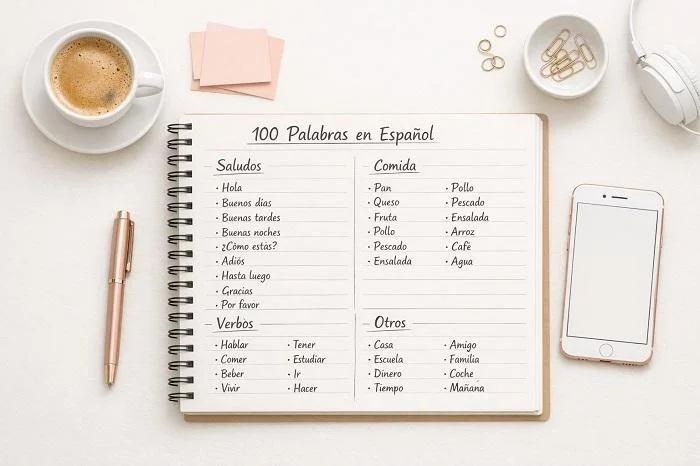
1. Read the Spanish clue first
Try to identify familiar nouns, verbs, and adjectives before translating the entire question. Even recognizing two or three words can help you work out the meaning.
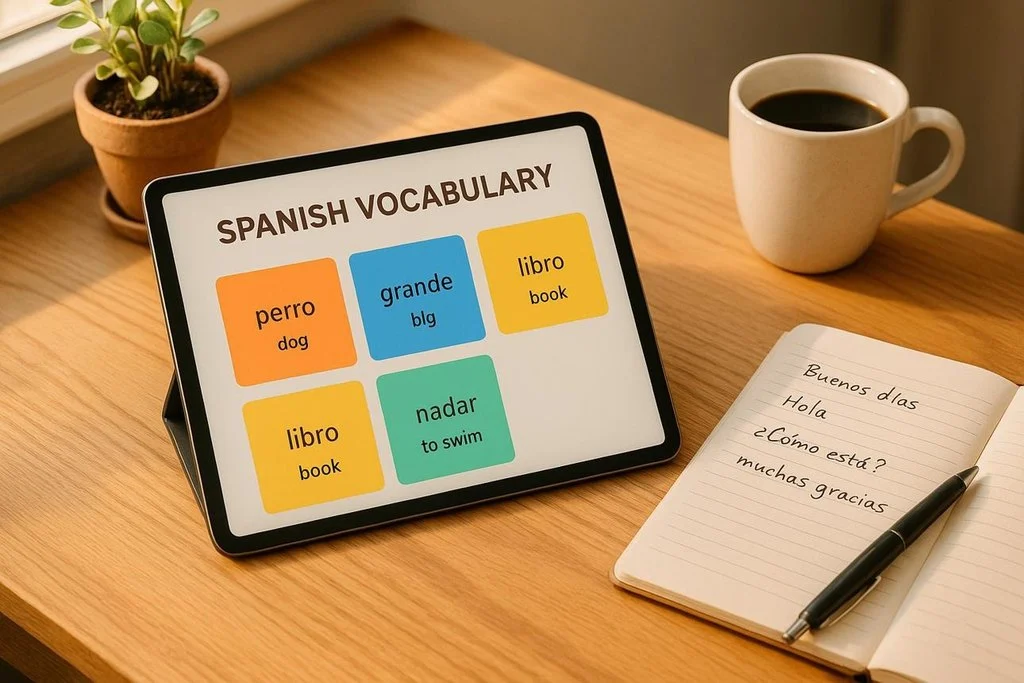
2. Record new vocabulary
Write down unfamiliar words with their English meanings. For example, llave means key, ventana means window, and nieve means snow.
3. Explain your answer aloud
Use a complete sentence such as La respuesta es un libro porque tiene páginas (“The answer is a book because it has pages”). This combines vocabulary with sentence construction.
4. Repeat the puzzles later
Return to puzzles you found difficult. Try solving them without the English translation to check whether you remember the words and reasoning.
Spanish Puzzle Challenge: Test Your Score
Want to see how much you understood? Try this short quiz without looking back at the answers.
5-question Spanish quiz
0/5 answered
1. What does “ventana” mean?
Door
Window
Mirror
2. What is the Spanish word for a riddle?
Adivinanza
Estantería
Cuchara
3. What number comes next: 4, 8, 12, 16, __?
18
20
24
4. Which word means “cold”?
Caliente
Rápido
Frío
5. What is the Spanish word for a book?
Libro
Llave
Río
Check answers
FAQs
1. What are puzzles in Spanish called?
Puzzles in Spanish have several names depending on the format. Adivinanzas means riddles, acertijos means puzzles or brain teasers, crucigramas means crosswords, and sopa de letras means word search. Rompecabezas can refer to jigsaw puzzles or puzzles more generally.
2. What are some easy puzzles in Spanish?
Easy Spanish puzzles use familiar vocabulary and simple clues. Examples include guessing un libro (a book), un reloj (a clock), or una llave (a key). These puzzles are suitable for beginners who want to practice everyday Spanish words.
3. Are Spanish puzzles good for language learners?
Spanish puzzles provide opportunities to practice vocabulary, reading comprehension, spelling, and sentence structure. They also encourage learners to infer meaning from context. Their usefulness depends on the learner’s level and the type of puzzle, so beginners should start with familiar words and clear translations.
4. What is the difference between adivinanza and acertijo?
An adivinanza is usually a riddle that describes something indirectly, often using rhyme or wordplay. An acertijo is a broader term for a puzzle or brain teaser that requires reasoning. The terms can overlap in everyday Spanish.
5. Can children solve puzzles in Spanish?
Yes. Children can enjoy simple riddles, animal clues, picture puzzles, matching games, and basic number challenges in Spanish. Choose puzzles with age-appropriate vocabulary and explanations, and offer English translations when needed.
6. What are some challenging Spanish puzzles for adults?
More challenging Spanish puzzles can include ambiguous vocabulary, double meanings, sentence-order challenges, number sequences, and multi-step logic problems. Advanced learners may particularly enjoy puzzles that depend on Spanish spelling, idioms, or wordplay.
7. Can I use Spanish puzzles in a classroom?
Yes. Teachers can use Spanish puzzles as warm-up activities, vocabulary reviews, group competitions, or short reading exercises. Students can work individually or in teams and explain their answers in complete Spanish sentences.
8. What is a Spanish word search called?
A Spanish word search is called a sopa de letras, which literally means “soup of letters.” Players search a grid for words that may appear horizontally, vertically, diagonally, or backward, depending on the puzzle’s rules.
9. What is a crossword puzzle called in Spanish?
A crossword puzzle is called a crucigrama. Spanish crosswords can help learners practice vocabulary, spelling, definitions, and sometimes accent marks. Beginners may benefit from a word bank or simple clues.
10. How can I make Spanish puzzles more difficult?
Try solving the puzzles without English translations, setting a time limit, or explaining every answer in Spanish. You can also create your own riddles using new vocabulary, double meanings, and more complex sentence structures.
Conclusion
Puzzles in Spanish offer a fun way to combine language practice with riddles, vocabulary games, arithmetic, and logical reasoning. From identifying everyday objects to completing Spanish sentences and solving number sequences, each challenge gives you an opportunity to understand words in context.
Start with the easier puzzles, then move to the more challenging questions as your vocabulary grows. If you’re learning Spanish, try answering aloud, writing down new expressions, and explaining why each solution works. You can also share the puzzles with classmates, friends, or family and solve them together. For your next challenge, explore Spanish riddles, kids’ brain teasers, or harder logic puzzles to keep your practice varied and enjoyable.

Ryan Mitchell is a writer and puzzlesmith who crafts engaging brainteasers, logic puzzles and interactive word games for Puzzlenexa.com. With a deep passion for problem solving, his work focuses on challenging readers, encouraging critical thinking and making complex puzzles accessible and fun for all skill levels.