These nine puzzles offer a mix of riddles, number patterns, logical reasoning, wordplay, and lateral-thinking challenges. Each puzzle includes a hint and a clearly explained answer, so you can test your problem-solving skills, challenge friends and family, and learn how to approach different types of brain teasers.
Looking for nine puzzles that are fun to solve and rewarding to figure out? This collection combines different kinds of brain challenges, from spotting mathematical patterns to solving everyday logic problems. Some puzzles are easy enough to warm up with, while others require you to slow down, question your assumptions, and examine the details carefully.
Try solving each puzzle before reading its answer. If you get stuck, use the hint to find a new direction without giving away the solution. These puzzles are suitable for older kids, students, adults, and families who enjoy a little friendly competition.
Keep track of how many you solve correctly on your first attempt. You might discover that your strongest skill is recognizing patterns, interpreting language, or thinking outside the box.
Can You Solve All Nine Puzzles?
Your puzzle challenge
Solve each question before revealing its answer.
0 of 9 completed
0%
Puzzle 1: The Missing Number
Puzzle 2: The Three Switches
Puzzle 3: The Family Photo
Puzzle 4: The Reversed Number
Puzzle 5: The One-Word Difference
Puzzle 6: The Two Ropes
Puzzle 7: The Library Mystery
Puzzle 8: The Clock Angle
Puzzle 9: The Fruit Basket
Puzzle 1 The Missing Number
Easy
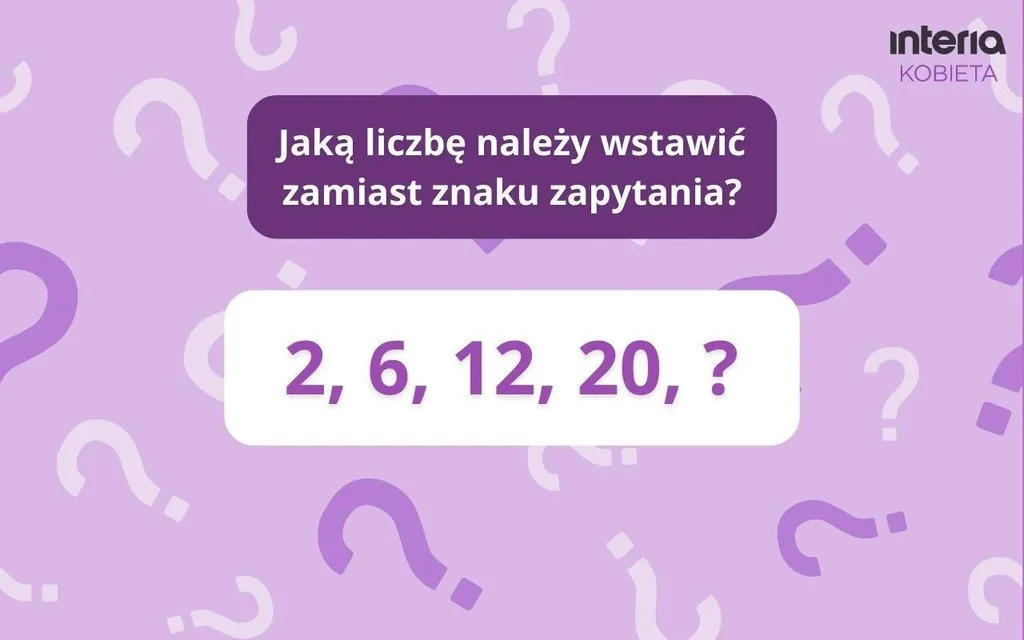
Question: Find the missing number in this sequence:
2, 6, 12, 20, 30, ?
Hint: Look at the difference between each pair of consecutive numbers.
Pause here before revealing the answer.
Reveal answer to Puzzle 1
Puzzle 2 The Three Switches
Hard
Question: Outside a closed room are three switches. Inside is one traditional incandescent light bulb. Exactly one switch controls the bulb.
You may operate the switches however you like, but you can enter the room only once. How can you identify the correct switch?
Hint: The bulb can provide information other than whether it is glowing.
Reveal answer to Puzzle 2
Puzzle 3 The Family Photo
Easy
Question: A person looks at a photograph and says:
“I have no brothers or sisters, but that person’s father is my father’s son.”
Who is in the photograph?
Hint: If the speaker has no siblings, who is their father’s son?
Reveal answer to Puzzle 3
Puzzle 4 The Reversed Number
Medium
Question: I am a two-digit number. My digits add up to 9. When my digits are reversed, the new number is 27 greater than the original number. What number am I?
Hint: Reversing two digits changes their place values, but not their sum.
Reveal answer to Puzzle 4
Puzzle 5 The One-Word Difference
Easy
Question: Which English word becomes shorter when you add two letters to it?
Hint: Think about what happens when a word describes its own length.
Reveal answer to Puzzle 5
Puzzle 6 The Two Ropes
Hard
Question: You have two ropes. Each takes exactly 60 minutes to burn completely, but they burn at uneven rates. You also have a lighter.
How can you measure exactly 45 minutes?
Hint: Lighting both ends of a rope changes the time it takes to burn completely.
Reveal answer to Puzzle 6
Puzzle 7 The Library Mystery
Medium
Question: A library book has gone missing. Three students make statements:
- Aisha: “Bilal took the book.”
- Bilal: “I did not take the book.”
- Cara: “Aisha did not take the book.”
Exactly one statement is true. Who took the book?
Hint: Test each student’s possible involvement and count the true statements.
Reveal answer to Puzzle 7
Puzzle 8 The Clock Angle
Easy
Question: At exactly 3:00, what is the smaller angle between the hour hand and the minute hand on a standard clock?
Hint: A complete circle has 360 degrees and the clock face has 12 equal hour divisions.
Reveal answer to Puzzle 8
Puzzle 9 The Fruit Basket
Hard
Question: Three baskets are labeled Apples, Oranges, and Mixed. Every label is wrong.
You may pick one fruit from just one basket without looking inside. How can you correctly label all three baskets?
Hint: Start with the basket labeled “Mixed.” Because every label is wrong, it cannot contain a mixture.
Reveal answer to Puzzle 9
How to Improve Your Puzzle-Solving Skills
You don’t need to solve every puzzle immediately to become a better problem-solver. The important part is learning to approach a question methodically.
- Look for patterns: In number puzzles, calculate differences or examine repeated operations.
- Question assumptions: Logic puzzles sometimes rely on details you initially overlook.
- Break the problem into steps: Work through each condition separately before combining them.
- Use hints strategically: A small clue can reveal the right approach without removing the challenge.
- Explain your answer: If you can justify your reasoning clearly, you probably understand the solution.
Challenge Your Friends
Try these nine puzzles with friends, classmates, or family members. Read the questions aloud, give everyone the same amount of time, and allow hints only when needed. You can compare answers afterward and discuss the reasoning rather than focusing only on who finishes first.
For an extra challenge, ask each participant to explain their solution without looking at the answer key. This makes the activity useful for practicing communication as well as reasoning.
Puzzle Score: How Many Did You Solve?
Count the puzzles you answered correctly before revealing their solutions.
Select your first-attempt score.
0 / 9
Keep practicing! Try the easier puzzles again and focus on identifying the clues.
FAQ + PAA
1. What are the nine puzzles?
The nine puzzles in this collection cover number patterns, switches and light bulbs, family relationships, reversed numbers, wordplay, rope timing, logical deduction, clock angles, and mislabeled fruit baskets. Each puzzle includes a hint and an explanation to help readers understand the reasoning.
2. Are these nine puzzles suitable for kids?
Most are suitable for older children who can follow basic logic and arithmetic. The switch, rope, and fruit-basket puzzles are more challenging and may benefit from adult guidance. Younger children can start with the number sequence, wordplay, and clock-angle questions.
3. Do these puzzles have answers?
Yes. All nine puzzles include answers and explanations. Readers can attempt each question first, use the hint if necessary, and reveal the solution afterward. The explanations show how the answers follow from the information provided.
4. Which puzzle is the hardest?
The three-switch puzzle, two-rope timing puzzle, and mislabeled fruit-basket puzzle are among the most demanding because they require multiple steps of reasoning. Difficulty varies by experience, so a puzzle that feels difficult to one person may be straightforward to another.
5. How can I solve brain puzzles more easily?
Read the question carefully, identify every condition, and avoid assuming information that the puzzle doesn’t provide. For number sequences, examine differences and repeated operations. For logic problems, test possible scenarios systematically and eliminate those that contradict the clues.
6. Can I use these puzzles in a classroom?
Yes. Teachers can use these puzzles as warm-up activities, group discussions, or exercises in logical reasoning. Ask students to explain their thinking rather than simply give the final answer. Adjust the difficulty and offer hints according to students’ ages and experience.
7. What skills do logic puzzles develop?
Logic puzzles provide practice in deductive reasoning, pattern recognition, analytical thinking, and problem-solving. Depending on the puzzle, they can also encourage mathematical reasoning, careful reading, and clear communication. They are educational activities, not a guarantee of measurable improvements in intelligence.
8. Can I play these puzzles with friends or family?
Absolutely. Take turns reading each question aloud, agree on a time limit, and compare solutions after everyone has had an opportunity to answer. Discussing different approaches can make the activity more engaging than simply competing to finish first.
Conclusion
These nine puzzles offer a simple way to practice logical thinking, recognize patterns, and enjoy a little friendly competition. Each challenge uses a different approach, from numerical reasoning and wordplay to deduction and lateral thinking. Reviewing the explanations is just as valuable as finding the answers because it helps you understand why a solution works.
Share the collection with a friend or family member and see which puzzles they find easiest or hardest. If you enjoyed this challenge, your next step could be a collection of harder logic puzzles, number pattern challenges, or printable brain teasers for group activities. Keep questioning assumptions, work through clues carefully, and enjoy the process of solving each new problem.

Ethan Brooks is a puzzle enthusiast and writer at PuzzleNexa.com, creating fun riddles, brain teasers and logic puzzles designed to challenge minds and spark curiosity.