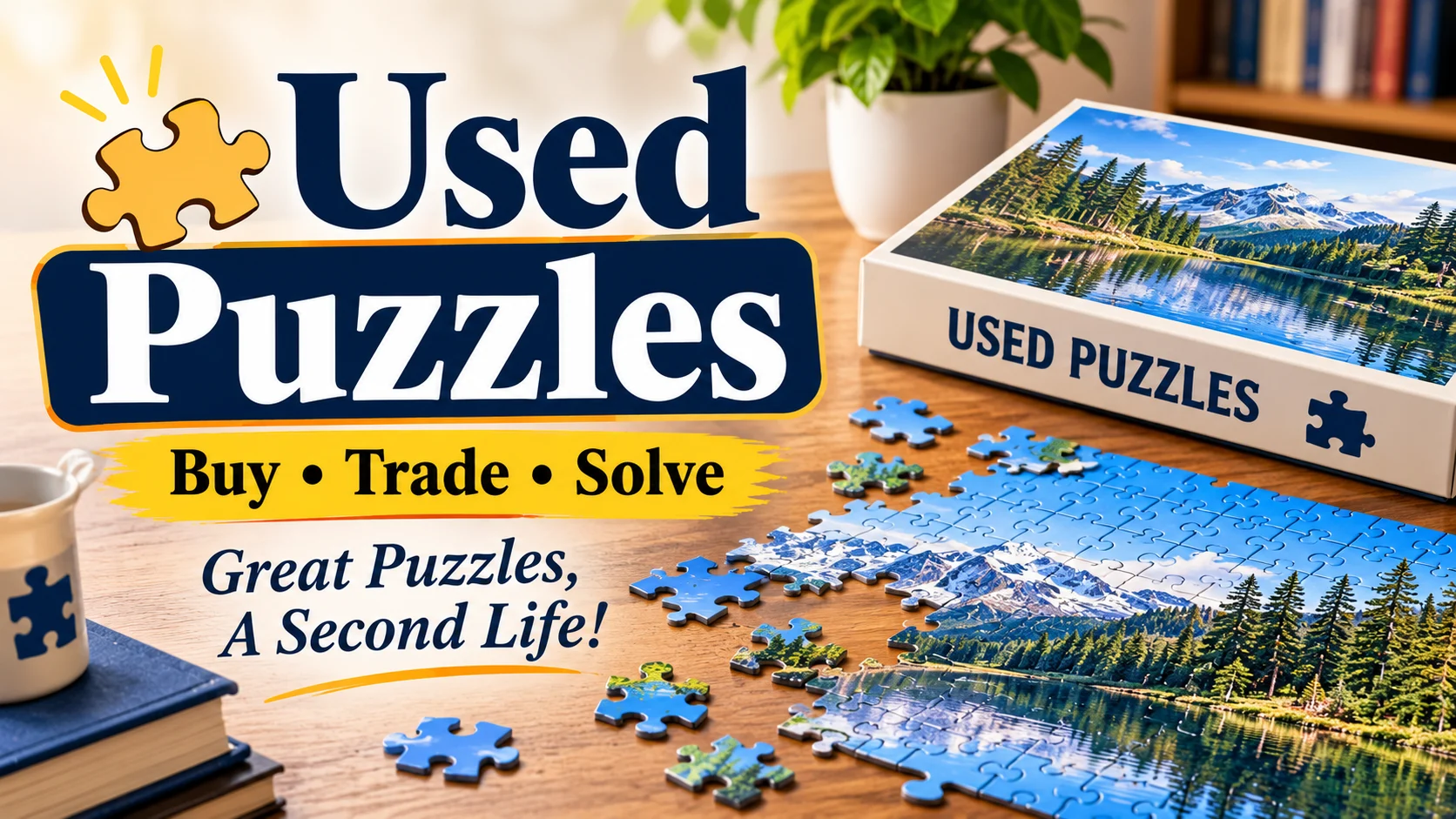
Used puzzles are pre-owned jigsaw puzzles that can often be purchased, swapped, or borrowed for less than new ones. Before buying, check the box, confirm the piece count if possible, inspect the pieces for damage, and ask the seller whether the puzzle has been completed and verified.
Used puzzles can be a budget-friendly way to enjoy a new image or challenge without paying full retail price. They can also help you discover older designs, discontinued editions, and puzzles that are difficult to find new. Reusing puzzles gives them another chance to be enjoyed instead of leaving them unused at home.
The main trade-off is uncertainty: an opened box may contain missing pieces, worn cardboard, or parts from another puzzle. Some sellers carefully inspect their stock, while others sell puzzles as-is. For example, secondhand puzzle retailers may explain their checking process and clearly disclose that completeness cannot always be guaranteed.
Whether you’re shopping online, browsing a thrift store, or swapping puzzles with a friend, a few simple checks can help you make a better choice.
Where to find used puzzles
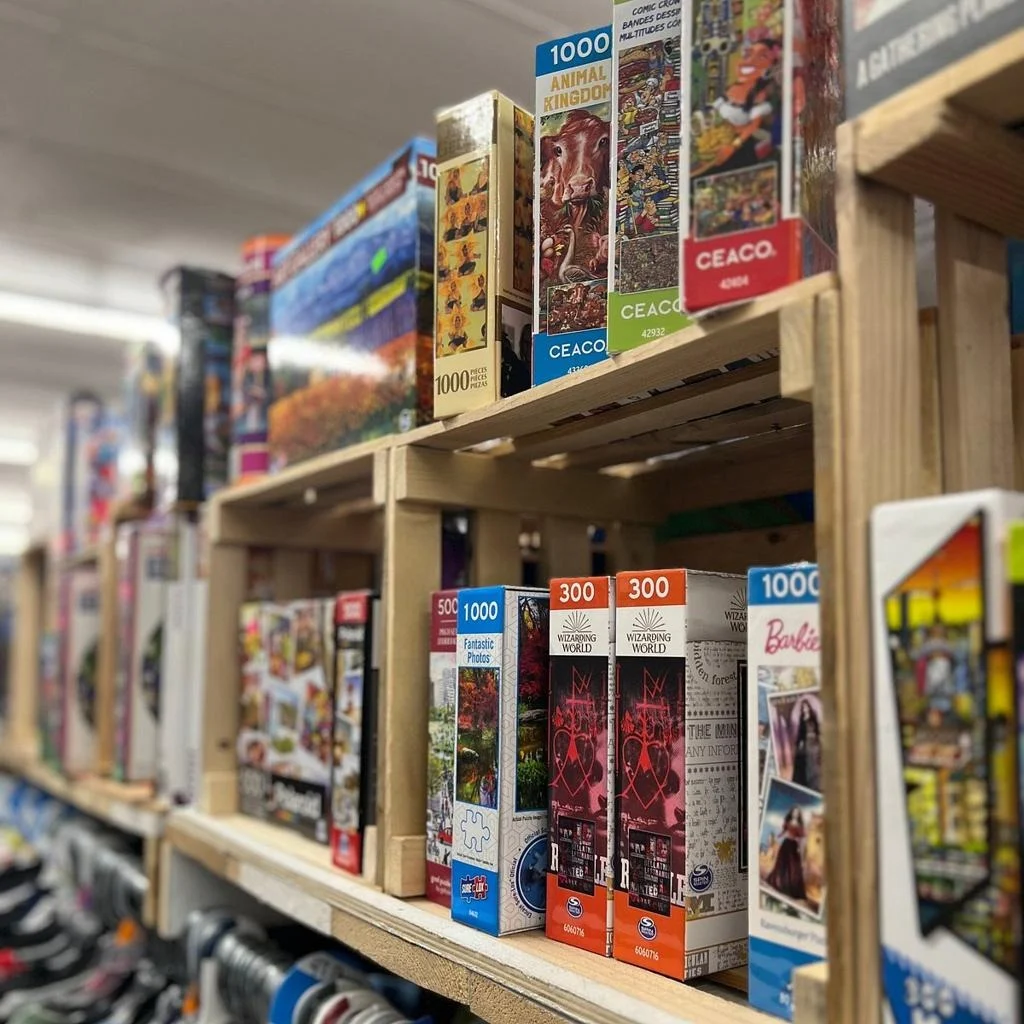
1. Thrift and charity shops
These shops may have affordable puzzles donated by previous owners. Inspect the box carefully, and ask whether staff know if the puzzle has been checked for missing pieces.
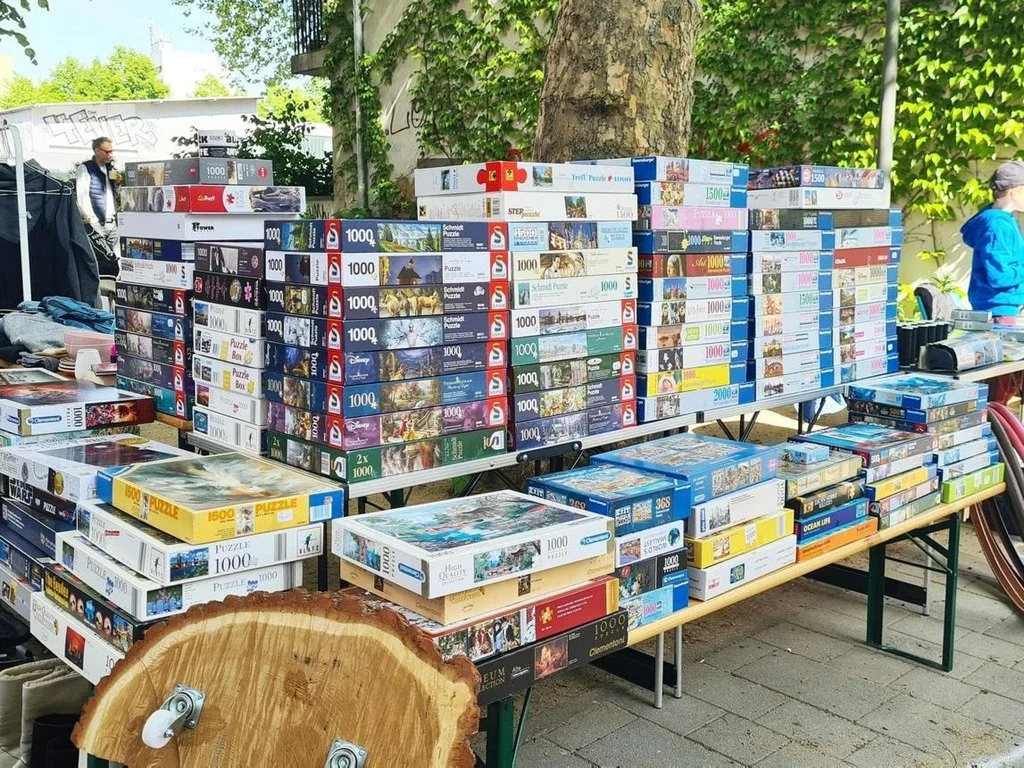
2. Garage sales and flea markets
You may be able to inspect a puzzle in person and ask the seller questions. If possible, open the box and check the condition before paying.

3. Online marketplaces
Search for “used jigsaw puzzles,” “secondhand puzzles,” or the name of a particular puzzle. Look for clear photographs, an honest condition description, and a seller who answers questions. Include delivery costs when comparing prices.
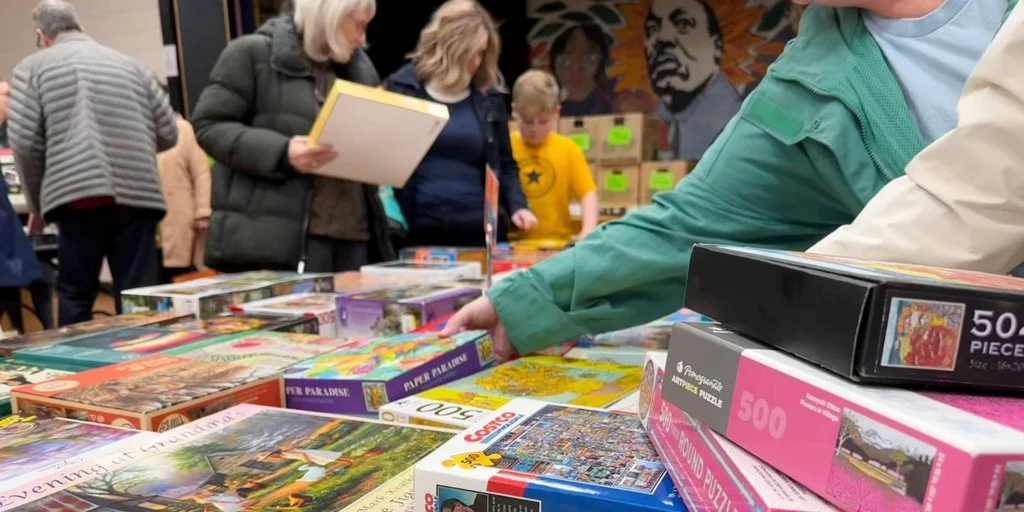
4. Puzzle swaps and community groups
Swap shelves, local puzzle groups, and some libraries offer ways to borrow or exchange puzzles. Availability and rules vary by location, so check the arrangements before making a trip.
How to check a used puzzle before buying
Use this checklist when examining a secondhand jigsaw puzzle. If you’re buying online, ask the seller for any details that aren’t shown in the listing.
Secondhand puzzle checklist
0 of 7
Confirm the puzzle title, brand, and advertised piece count.
Ask whether someone has assembled or counted the puzzle recently.
Inspect the box for water damage, mold, heavy dirt, or signs of pests.
Check photos for bent, torn, warped, or badly worn pieces.
Confirm that the pieces belong to the pictured puzzle and are stored securely.
Read the return policy and note whether the item is sold as-is.
Compare the total cost, including delivery, with a new puzzle.
Tick each item as you check it.
Reset
How can you tell if all the pieces are there?
The most reliable option is to ask whether the puzzle has been assembled and checked against the image or counted against its stated piece total. Some specialist sellers assemble smaller puzzles and spot-check larger ones; their inspection methods can differ.
A box that looks full does not prove the puzzle is complete. Shaking it or estimating its weight may offer clues, but neither method confirms that every piece is present. If completeness matters to you, request explicit confirmation and check the seller’s policy for missing pieces.
What condition is acceptable?
A slightly scuffed box may be perfectly fine if the pieces are in good shape. Pay more attention to the puzzle itself than to cosmetic wear on its packaging.
Avoid puzzles with visible moisture damage, persistent musty odors, suspicious contamination, or pieces that appear swollen or warped. For children’s puzzles, also consider age suitability and whether the pieces are safe and intact.
Are used puzzles worth buying?
They can be, especially when the puzzle is in good condition and the price reflects its actual state. Consider these trade-offs before deciding.
| Potential benefit | What to consider |
| Lower purchase price | Add delivery fees and any other charges. |
| Older or unusual designs | Check the exact image, edition, and piece count. |
| Reuse instead of buying new | Make sure the puzzle is suitable for your needs. |
| A chance to swap rather than purchase | Confirm the exchange rules and the other puzzle’s condition. |
| A collectible or vintage find | Check completed-sale prices for comparable puzzles rather than relying only on asking prices. |
Older puzzles are not automatically valuable collectibles. Condition, maker, age, rarity, and actual buyer demand all affect resale value; comparing similar sold items is more informative than assuming a vintage label means a high price.
How to buy used puzzles online safely
Before paying, review the listing and communicate clearly with the seller.
- Ask specific questions. “Has the puzzle been completed and checked for missing pieces?” is more useful than “Is it in good condition?”
- Request recent photos. Ask for the box, puzzle image, and pieces or bag contents when available.
- Read the condition description. Look for terms such as “complete,” “unchecked,” “open box,” and “sold as-is.”
- Check the seller’s terms. Find out what happens if the item arrives damaged or differs materially from its description.
- Use a payment method with appropriate protections. Follow the marketplace’s recommended payment and communication process.
- Compare the final price. A low listing price may not be a bargain after shipping or import charges.
If the seller cannot verify completeness, decide whether you would still enjoy the puzzle if a piece were missing. If not, choose a verified option or a seller with a suitable return policy.
What to do with puzzles you’ve already used
If you have puzzles at home that you’ve completed and no longer want, you have several options:
- Sell them: Photograph the box and clearly describe the condition and whether completeness has been verified.
- Swap them: Exchange a completed puzzle with a friend or through a local group.
- Donate them: Ask the organization first, because some libraries and charity programs accept only complete, clean puzzles in good condition.
- Reuse incomplete puzzles creatively: Consider crafts or art projects instead of passing an incomplete puzzle to someone who expects a complete set.
Always disclose missing pieces or damage. A clear description helps the next person choose knowingly and reduces disappointment.
Frequently overlooked details
A used puzzle and an open-box puzzle are not necessarily the same. A used puzzle may have been assembled before; an open-box puzzle may simply have been opened or handled. A damaged box can also contain an unused puzzle. Ask about the actual condition instead of relying on the listing label.
A “complete” claim should be specific. Ask when and how completeness was checked. Even careful sellers can make mistakes, so read the listing terms and keep any relevant purchase details.
A cheap puzzle is not always the best value. The right choice depends on the image, piece quality, completeness, condition, and total cost not price alone.
FAQs
Where is the best place to buy used puzzles?
Try thrift shops, garage sales, online marketplaces, local puzzle groups, and community exchanges. The best option depends on your location and whether you want to inspect the puzzle in person. Wherever you shop, ask about missing pieces and read the condition description carefully.
Are used jigsaw puzzles worth buying?
Yes, if the price, condition, and completeness meet your expectations. Secondhand puzzles may offer savings or unusual designs, but an opened box does not guarantee every piece is present. Compare the total cost with a new puzzle before deciding.
How can I tell if a used puzzle is complete?
Ask whether the puzzle has been assembled or counted and when it was last checked. Inspect the pieces if you can. A full-looking box or a seller’s general assurance is not definitive proof that every piece is present.
What should I check before buying a secondhand puzzle?
Check the advertised piece count, box condition, piece quality, signs of moisture or contamination, seller reviews, and return terms. For online purchases, request clear photographs and ask whether completeness has been verified.
Are used puzzles suitable for children?
They can be, provided the puzzle is age-appropriate, clean, and in good condition. Check the recommended age and piece size, particularly for young children who may put small objects in their mouths.
Can I sell puzzles after completing them?
Yes. You can list them on a suitable marketplace, sell them locally, or offer them through a puzzle group. Include the brand, title, piece count, clear photographs, and an honest description of any damage or missing pieces.
Should I donate a puzzle with missing pieces?
Ask the recipient organization first. Some programs accept incomplete puzzles for crafts, while others require every piece to be present. Label any known missing pieces clearly, and do not present an incomplete puzzle as complete.
Are vintage puzzles more valuable than modern puzzles?
Not automatically. Value depends on factors such as maker, rarity, condition, demand, and whether collectors are seeking that specific design. Compare completed sales of similar puzzles rather than relying only on the seller’s asking price.
Conclusion
Used puzzles can be a satisfying, affordable way to enjoy jigsaws while giving existing items another life. The key is to shop carefully: inspect the box and pieces, ask clear questions, confirm whether completeness has been checked, and compare the full price with alternatives. If you’re selling, swapping, or donating a puzzle, describe its condition honestly so the next puzzler knows what to expect. Once you find a puzzle that suits your interests and budget, set aside a little table space, sort the edge pieces, and enjoy the challenge.

Ryan Mitchell is a writer and puzzlesmith who crafts engaging brainteasers, logic puzzles and interactive word games for Puzzlenexa.com. With a deep passion for problem solving, his work focuses on challenging readers, encouraging critical thinking and making complex puzzles accessible and fun for all skill levels.