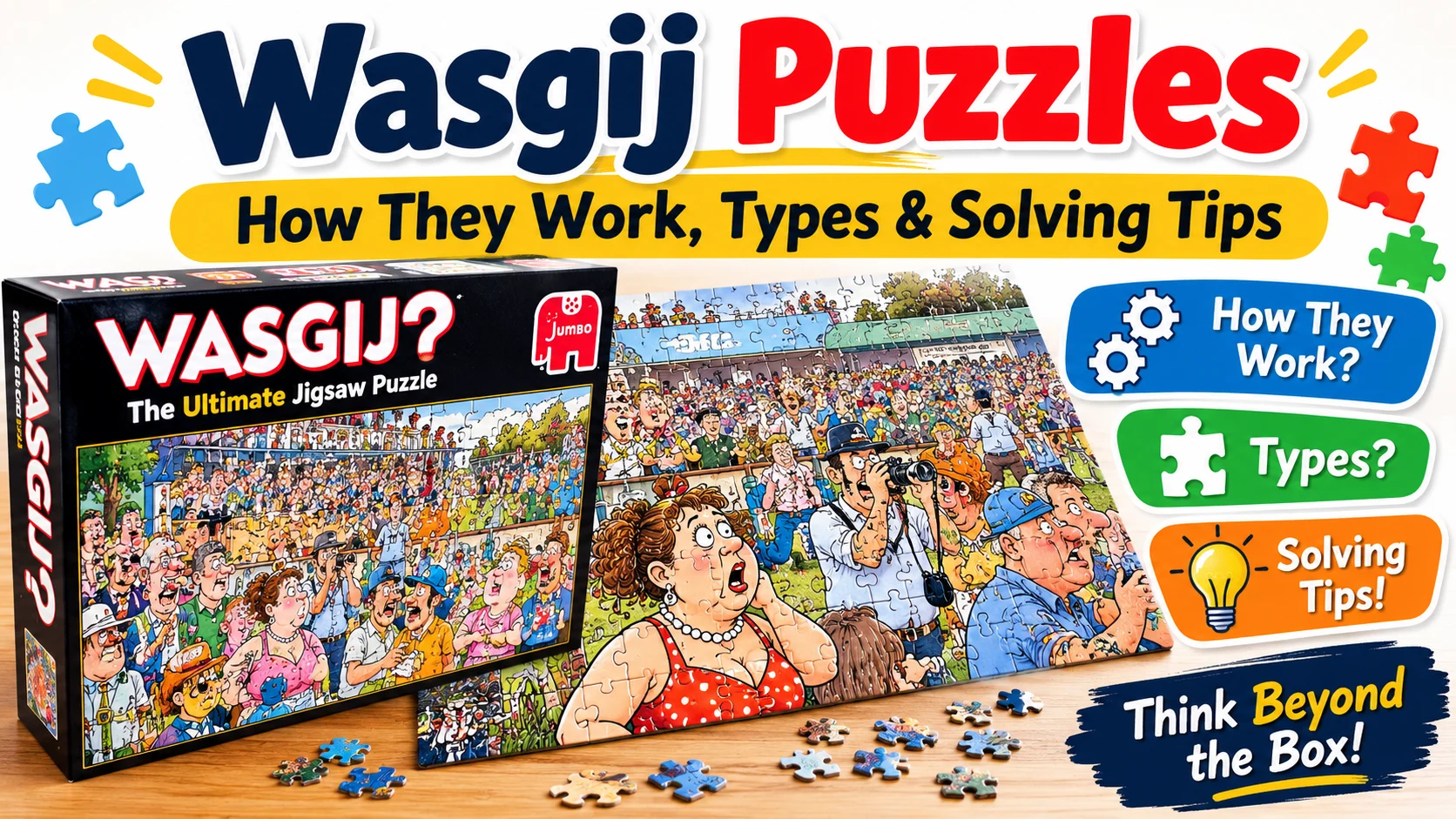
Wasgij puzzles are unusual jigsaw puzzles in which the picture on the box is a clue rather than the image you assemble. Instead of copying the cover, you use visual details, character expressions and your imagination to build a different scene. The exact challenge depends on the Wasgij collection.
Wasgij puzzles turn an ordinary jigsaw into a visual mystery. You might see a crowded street, a funny family gathering or a surprising everyday situation on the box, but the real challenge is to work out what the characters are seeing, what will happen next or how the scene might change in the future.
That twist makes these puzzles appealing to people who enjoy cartoon illustrations, clever clues and unexpected details. They require more than matching colors and shapes: you must interpret the scene before you can confidently assemble the finished picture.
In this guide, you’ll discover how Wasgij puzzles work, how the main collections differ, which puzzles may suit beginners and what practical techniques can make solving easier. You’ll also learn where to find official hints and solutions when you need extra help.
What Are Wasgij Puzzles?
Wasgij is a jigsaw puzzle brand whose name is jigsaw spelled backward. The concept challenges players to assemble an image different from the illustration shown on the box.
The brand launched its original concept in 1997. Its puzzles use humorous illustrated scenes, visual clues and imaginative problem-solving rather than relying solely on a picture-matching approach.
In a traditional jigsaw, you generally use the cover image as your direct reference. With Wasgij, you must interpret the cover and determine what the completed picture should show.
That distinction changes the solving process:
- Observe: Examine the characters, objects and surroundings.
- Interpret: Work out what the scene suggests.
- Predict: Decide which events or details belong in the hidden image.
- Assemble: Use the usual jigsaw techniques to build the picture.
The challenge is not to guess randomly. It is to use the clues provided to develop a plausible picture of the intended scene.
What Are the Different Types of Wasgij Puzzles?
Wasgij offers several collections, each built around a different imaginative challenge. The main options include Original, Destiny, Mystery, Christmas, Retro and Junior.
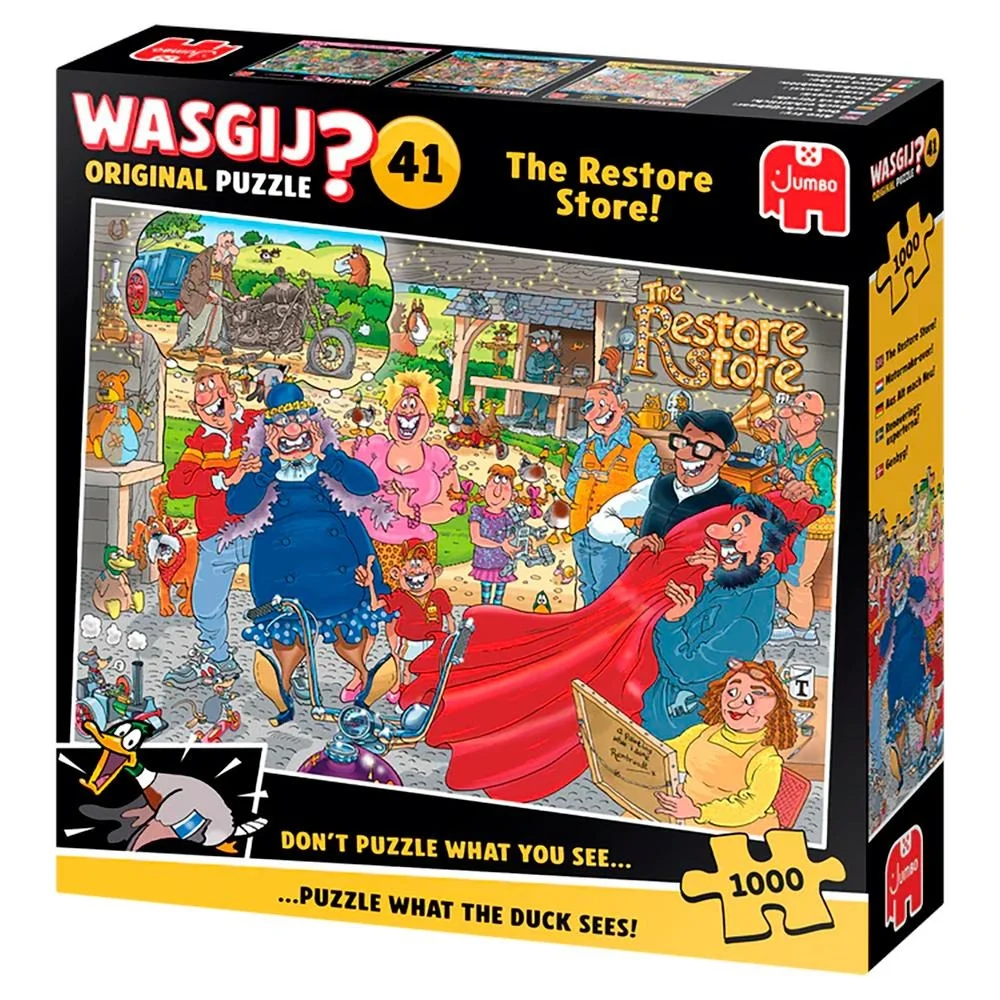
Wasgij Original
What are they looking at?
This collection asks you to imagine the scene from a character’s point of view. The people in the illustration provide clues to an image that lies beyond what you can see on the box.
Best for: Solvers who enjoy interpreting facial expressions, reactions and visual clues.
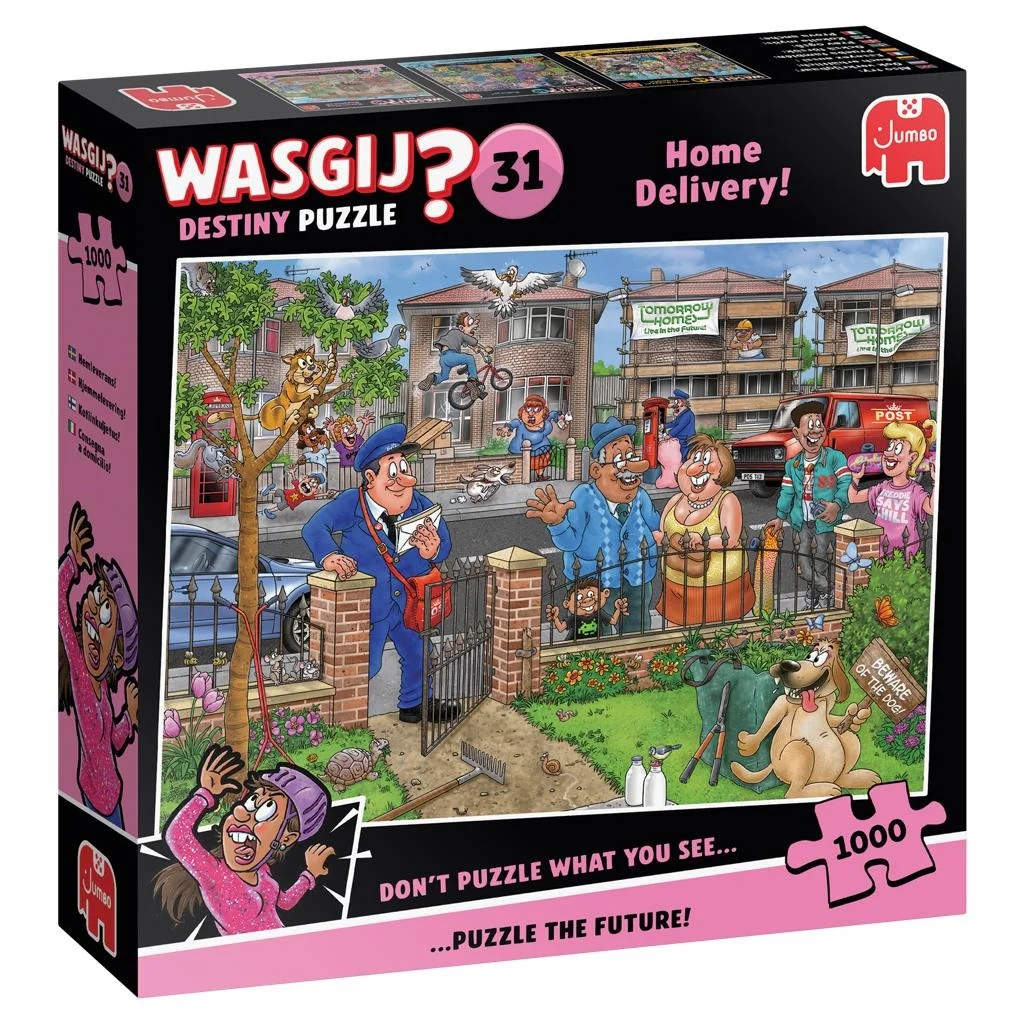
Wasgij Destiny
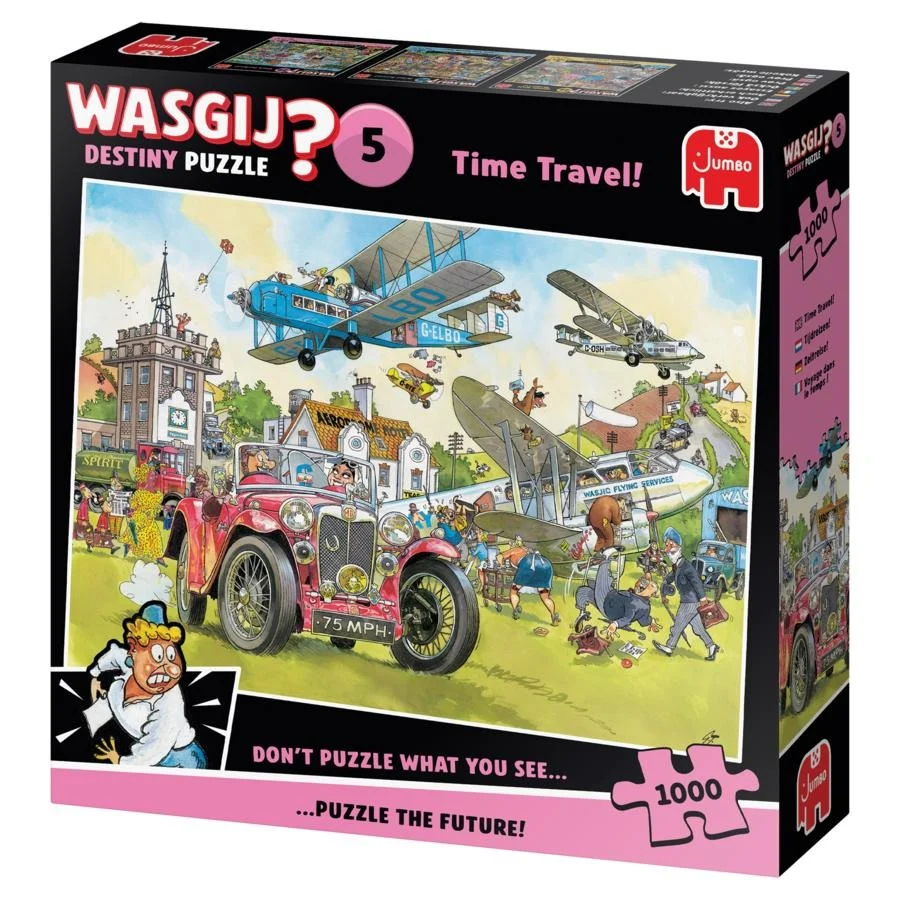
Imagine the future
Destiny asks you to picture how the characters and their surroundings might look in the future. Changes in fashion, technology and everyday life can help you imagine the transformation.
Best for: People who enjoy spotting changes and imagining how situations evolve over time.
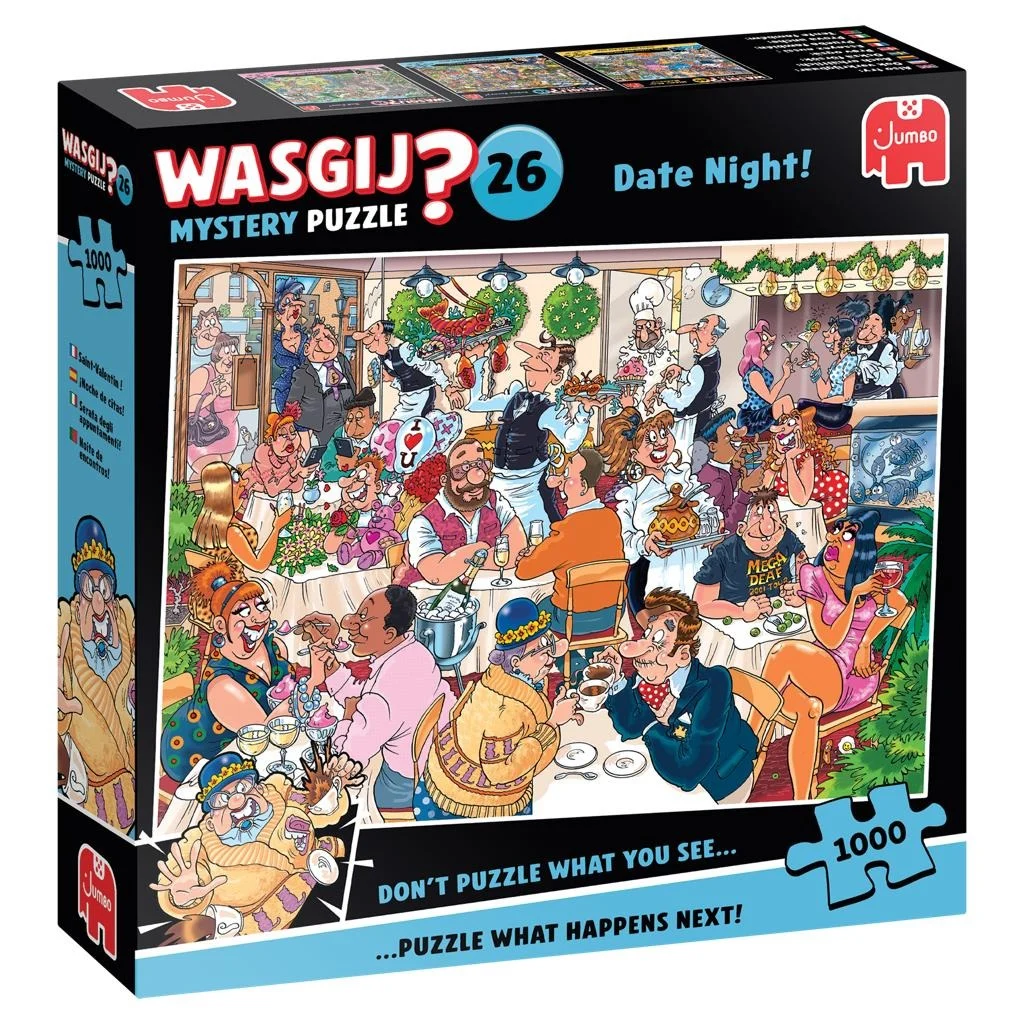
Wasgij Mystery
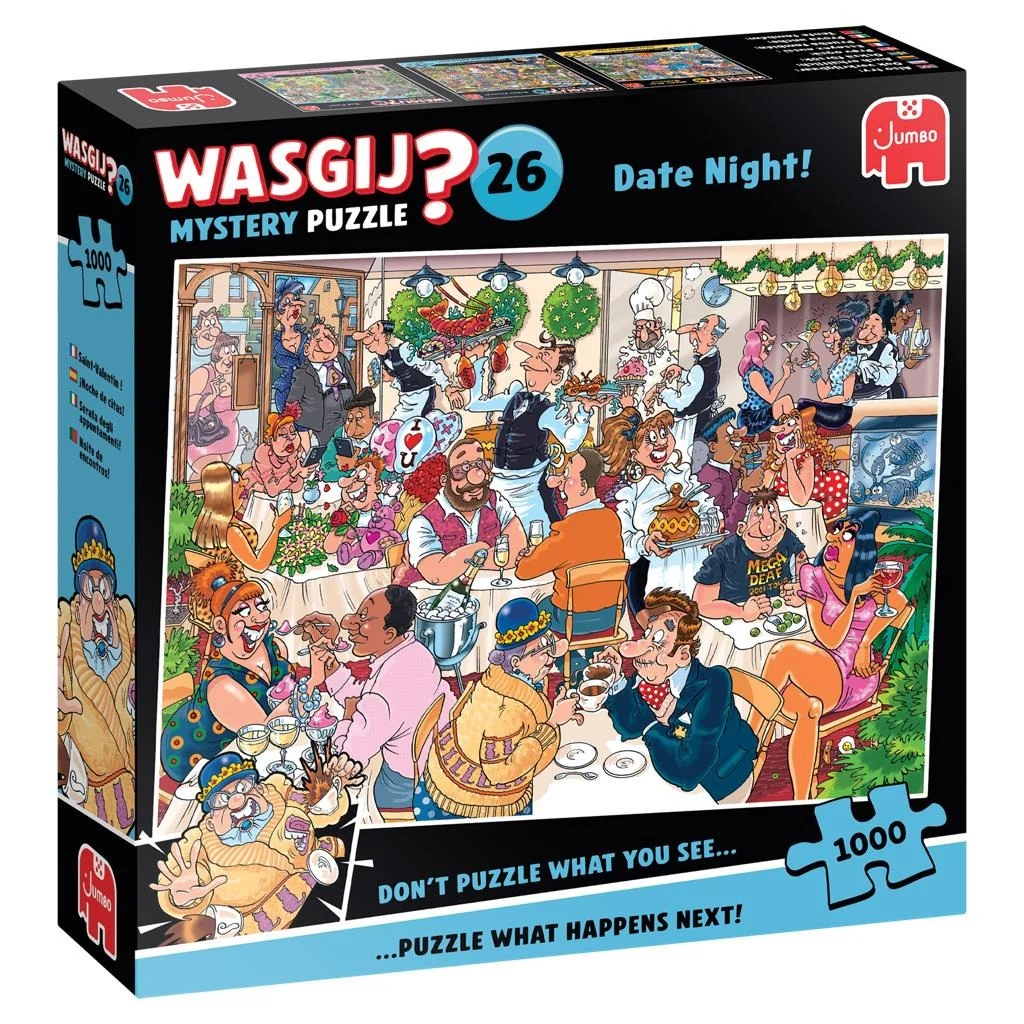
What happens next?
Mystery challenges you to predict the next moment in the illustrated scene. Examine what the characters are doing and look for clues that suggest an upcoming event.
Best for: Puzzle fans who enjoy anticipation, cause-and-effect clues and unexpected outcomes.
Wasgij Christmas
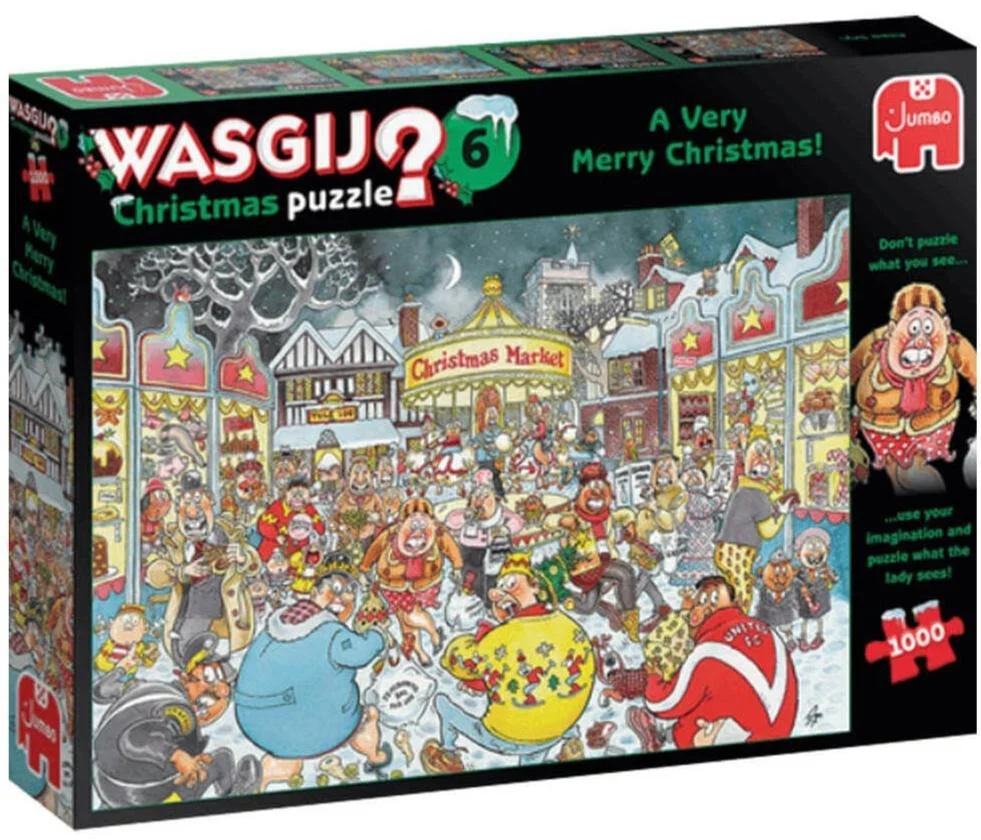
Festive mystery
Christmas puzzles follow the Original concept. You use the people and details in the festive scene to imagine what the characters are looking at.
Best for: Seasonal puzzling, holiday activities and festive gifts.
Wasgij Retro
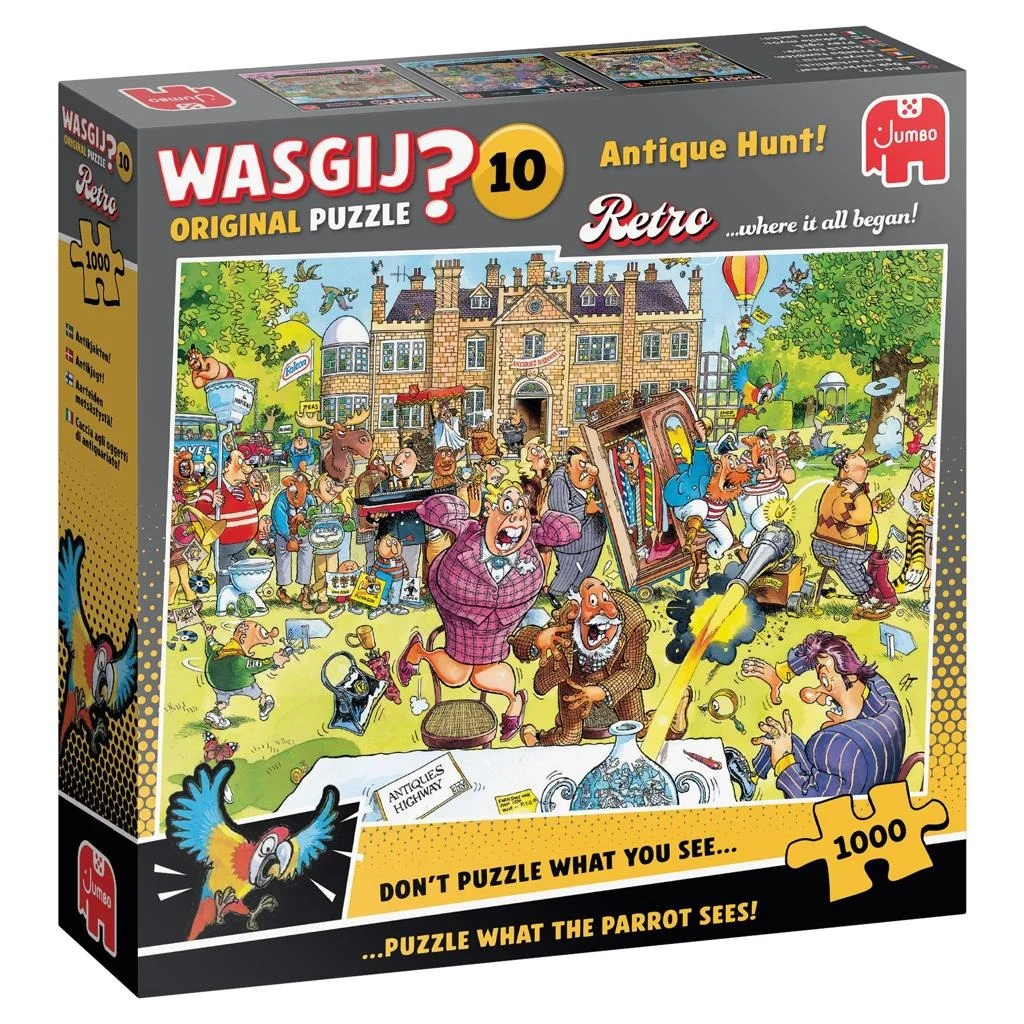
Classic designs
Retro brings back selected puzzles from earlier releases. It offers returning fans an opportunity to revisit familiar designs and gives newer puzzlers a chance to discover older editions.
Best for: Collectors and anyone interested in previous Wasgij releases.
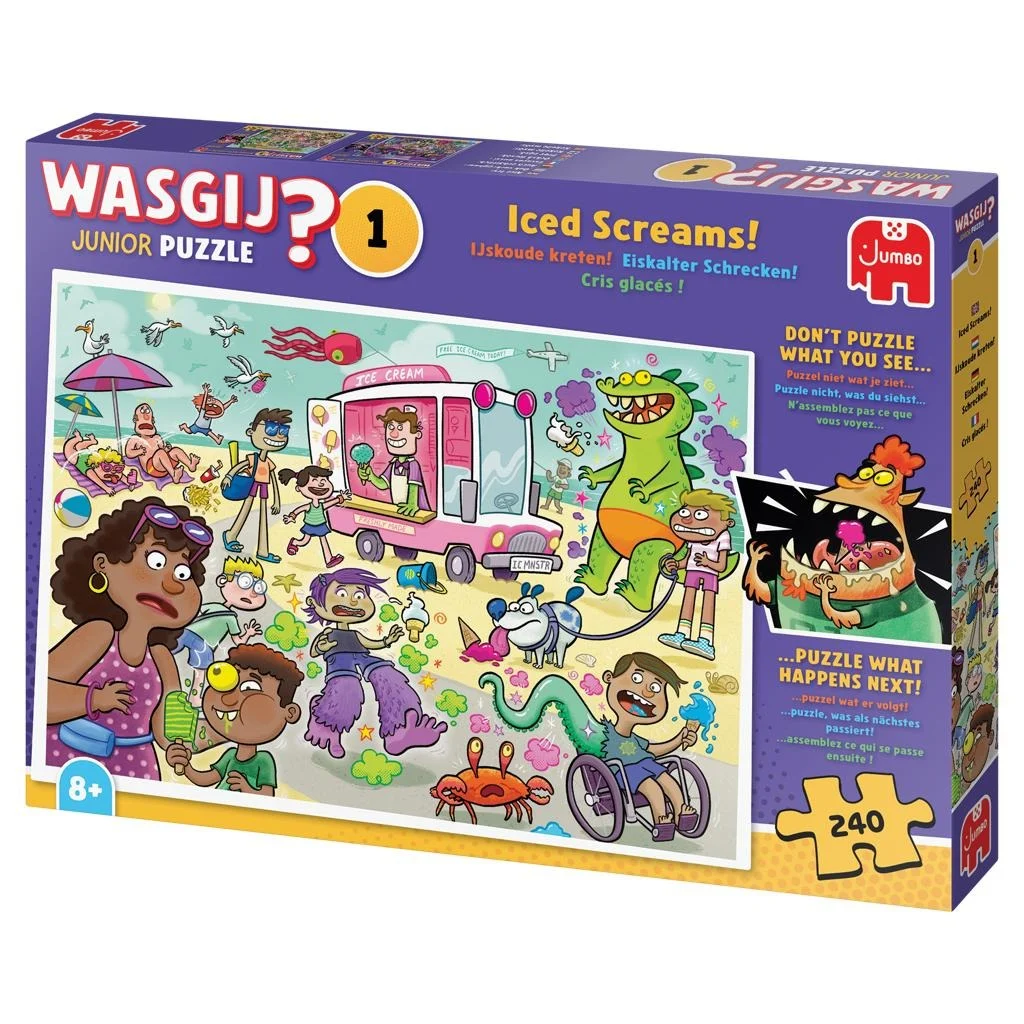
Wasgij Junior
For younger puzzlers
Junior uses an imaginative, next-event challenge based on the Mystery concept. The official range is designed for children aged eight and above, with selected puzzles containing 240 pieces. Always check the age guidance and piece count on the individual box.
Best for: Children who enjoy colorful cartoon scenes and age-appropriate jigsaw challenges.
Which Wasgij collection should you choose?
| If you enjoy… | Try this collection |
| Understanding what characters see | Original |
| Imagining future changes | Destiny |
| Predicting the next event | Mystery |
| Holiday-themed illustrations | Christmas |
| Revisiting older designs | Retro |
| A children’s puzzle challenge | Junior |
How Do Wasgij Puzzles Work?
The key to solving a Wasgij puzzle is understanding the question behind the illustration.
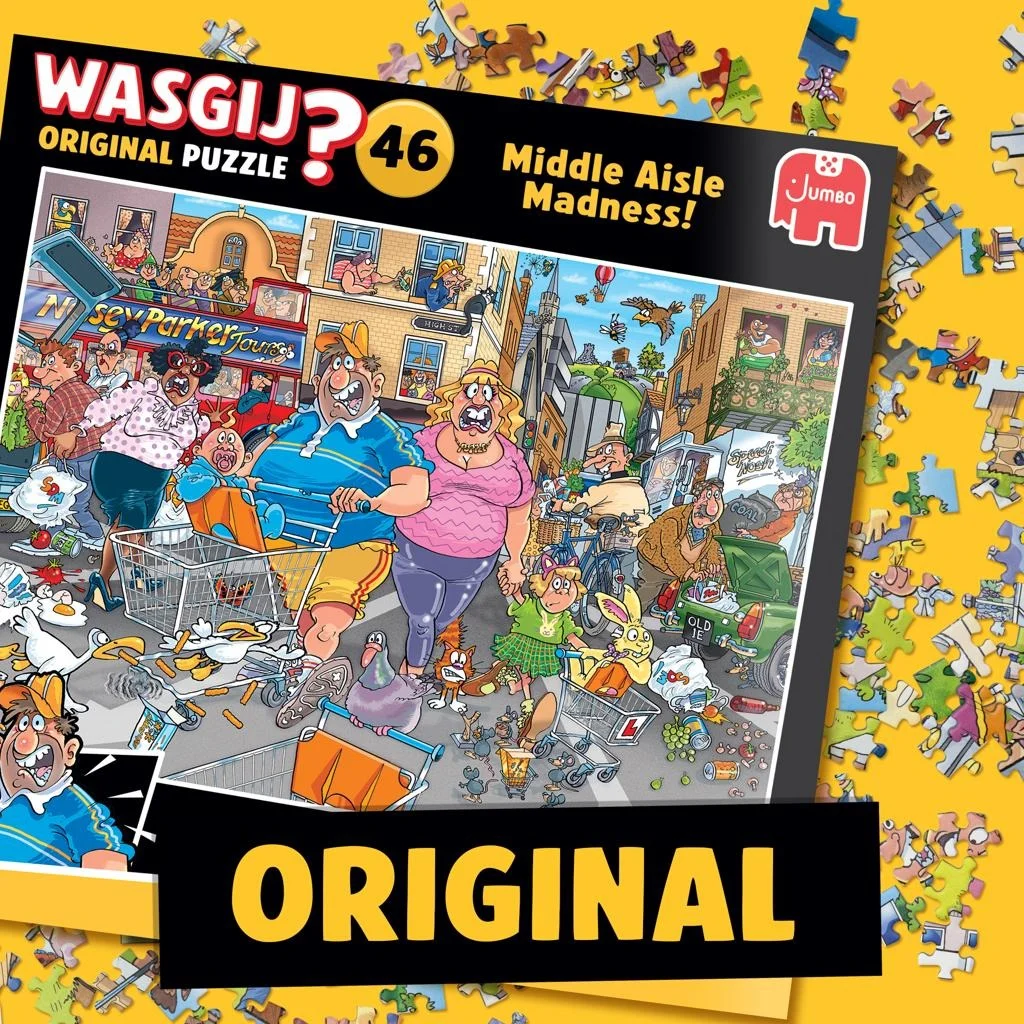
Step 1: Study the box image
Notice where the characters are looking, what they are holding and what seems unusual.

Step 2: Imagine the missing viewpoint
For Original, consider what lies in front of the characters. For Mystery, consider the next event. For Destiny, think about the future.
Step 3: Build the hidden picture
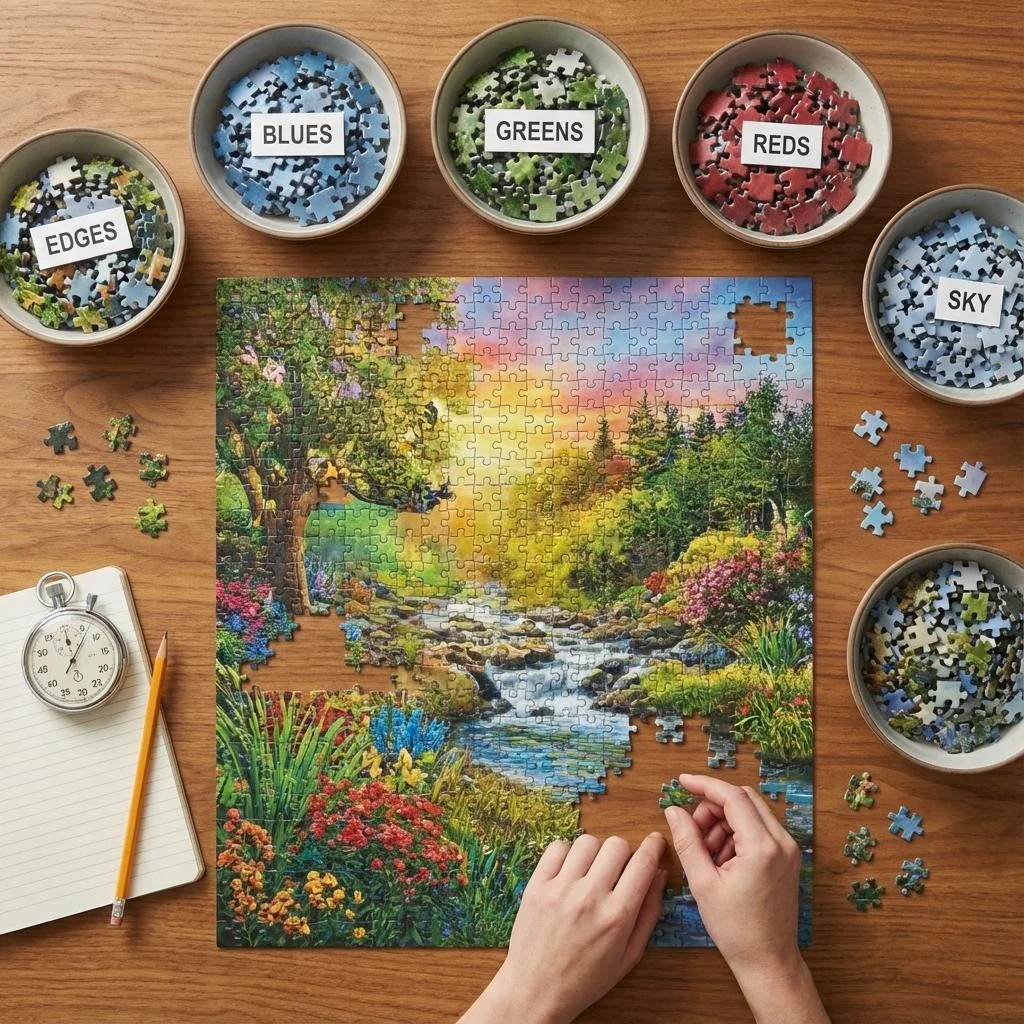
Sort pieces by shape, color, clothing, objects and recognizable details. Test your interpretation as sections begin to form.
The box illustration is a reference for reasoning, not a complete picture to copy. Use it to identify relationships between characters and objects, then combine those clues with the pieces themselves.
How to Solve Wasgij Puzzles: 8 Practical Tips
Read the puzzle instructions first
Identify the collection name and understand its specific challenge. Trying to reproduce the box illustration exactly can lead you in the wrong direction.
Examine faces and body language
Expressions, gestures and eye direction can be important clues. Ask yourself why someone looks surprised, excited, worried or amused.
Look for cause and effect
For Mystery puzzles, consider what an action might trigger. For Destiny puzzles, look for features that could plausibly change with time.
Sort edge pieces
As with conventional jigsaws, building the border can provide a useful starting point. Separate the edge pieces before tackling the more complex sections.
Group pieces by visual features
Organize pieces by dominant colors, clothing, objects, signs, backgrounds and other recognizable details. These groups help you build smaller sections without needing a complete reference image.
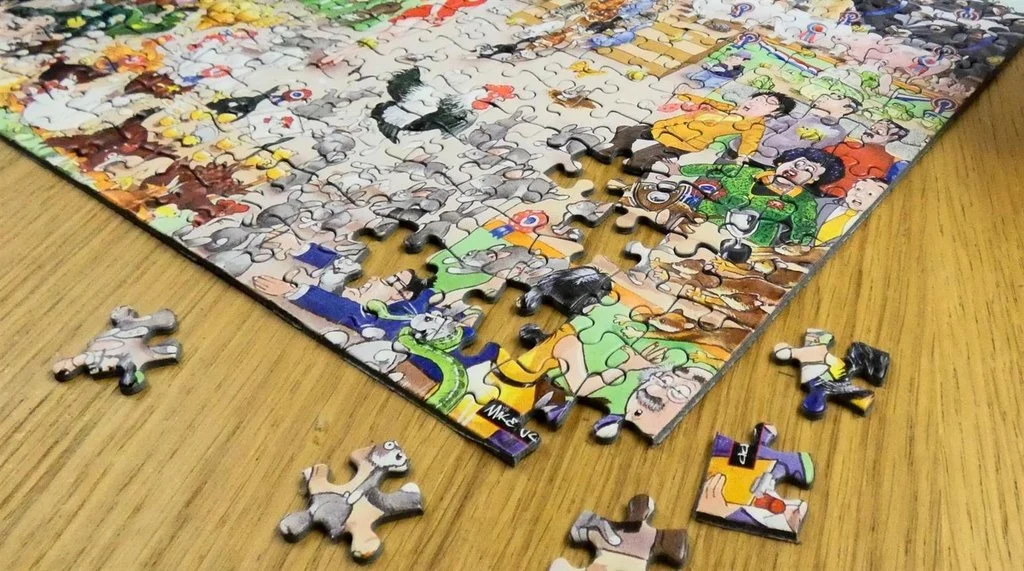
Use the shape of each piece
When color matching becomes difficult, compare tabs, blanks and neighboring piece shapes. Check that the illustration continues naturally across each connection.
Work in small sections
Complete identifiable objects, characters or background areas first. You can connect these sections as your understanding of the hidden scene improves.
Reconsider your interpretation when necessary
If a section refuses to fit, don’t force it. Revisit the clues and consider whether your original idea about the scene was mistaken.
The most useful rule: Let the pieces test your theory. A good interpretation should explain both the visible clues and the emerging picture.
Can You Solve This Original Mini Wasgij-Style Challenge?
Try this original, text-based observation challenge inspired by the idea of reasoning beyond a visible scene. It is not an official Wasgij puzzle or an official product solution.
The Unexpected Queue
Difficulty: Easy · Observation and deduction
Imagine a cartoon scene outside a bakery. Several people are standing in a queue. One person is holding an empty shopping basket, a child is pointing toward the roof, and the baker is looking through the window with a surprised expression.
Question: Which conclusion is best supported by the clues?
A. The bakery has definitely run out of bread.
B. Something unusual may be happening above or near the bakery.
C. The queue is waiting for a bus.
D. The baker is closing the shop permanently.
Check my answer
This miniature challenge demonstrates an important Wasgij-solving habit: distinguish what the clues support from what you merely imagine. Real Wasgij puzzles use illustrations and piece connections to help reveal a more specific intended scene.
Where Can You Find Wasgij Hints and Solutions?
If you are stuck, start with the official Wasgij website rather than relying on an unrelated image or an unverified answer.
- Official puzzle collections: Browse current ranges and discover individual puzzle designs. Visit the Wasgij collections page.
- Official hints and puzzle archive: Use the official puzzle catalogue to explore products and available puzzle information.
- Individual puzzle guidance: Search for the exact puzzle name or number to find relevant clues and product details.
The official website provides a dedicated puzzles-and-hints section, with individual puzzle pages offering information about particular designs.
Should you look at the solution?
That depends on how you prefer to solve puzzles.
Try examining the scene, sorting pieces and testing possible interpretations before viewing a completed image. If you remain stuck, use a hint first when one is available.
If you choose to view the full solution, remember that it may reveal the surprise you would otherwise discover gradually. For collectors, the exact puzzle title and number are especially useful when searching for the correct image.
Are Wasgij Puzzles Good for Beginners?
Yes, Wasgij puzzles can be enjoyable for beginners, provided they choose a suitable design and piece count. The unfamiliar solving method may initially be more challenging than a traditional jigsaw because the box image cannot be copied directly.
Beginners can make the experience easier by:
- Starting with a smaller piece count when available.
- Choosing a scene with distinct colors and recognizable objects.
- Sorting edge pieces and obvious visual groups.
- Taking breaks when the clues stop making sense.
- Using official hints if they need additional direction.
Experienced puzzlers may prefer larger or visually busier designs. However, piece count alone does not determine difficulty: a detailed illustration with many similar colors can be more challenging than a larger puzzle with clearly differentiated sections.
For younger players, choose a product explicitly designed for their age group and check the packaging before purchasing.
Conclusion
Wasgij puzzles offer a distinctive alternative to conventional jigsaws by making imagination and visual interpretation part of the solving process. Whether you choose Original, Destiny, Mystery, Christmas, Retro or Junior, the central challenge is to use the clues to build an image that differs from the box illustration.
Start by understanding the collection’s concept, examine the characters and objects carefully, sort your pieces into manageable groups and let the emerging picture guide your next move. When you need help, use official puzzle hints and verify that the solution matches your exact edition.
Once you have completed a puzzle, challenge a friend or family member to try another collection. Comparing how different people interpret the same clues can make the experience even more enjoyable.

Ethan Brooks is a puzzle enthusiast and writer at PuzzleNexa.com, creating fun riddles, brain teasers and logic puzzles designed to challenge minds and spark curiosity.