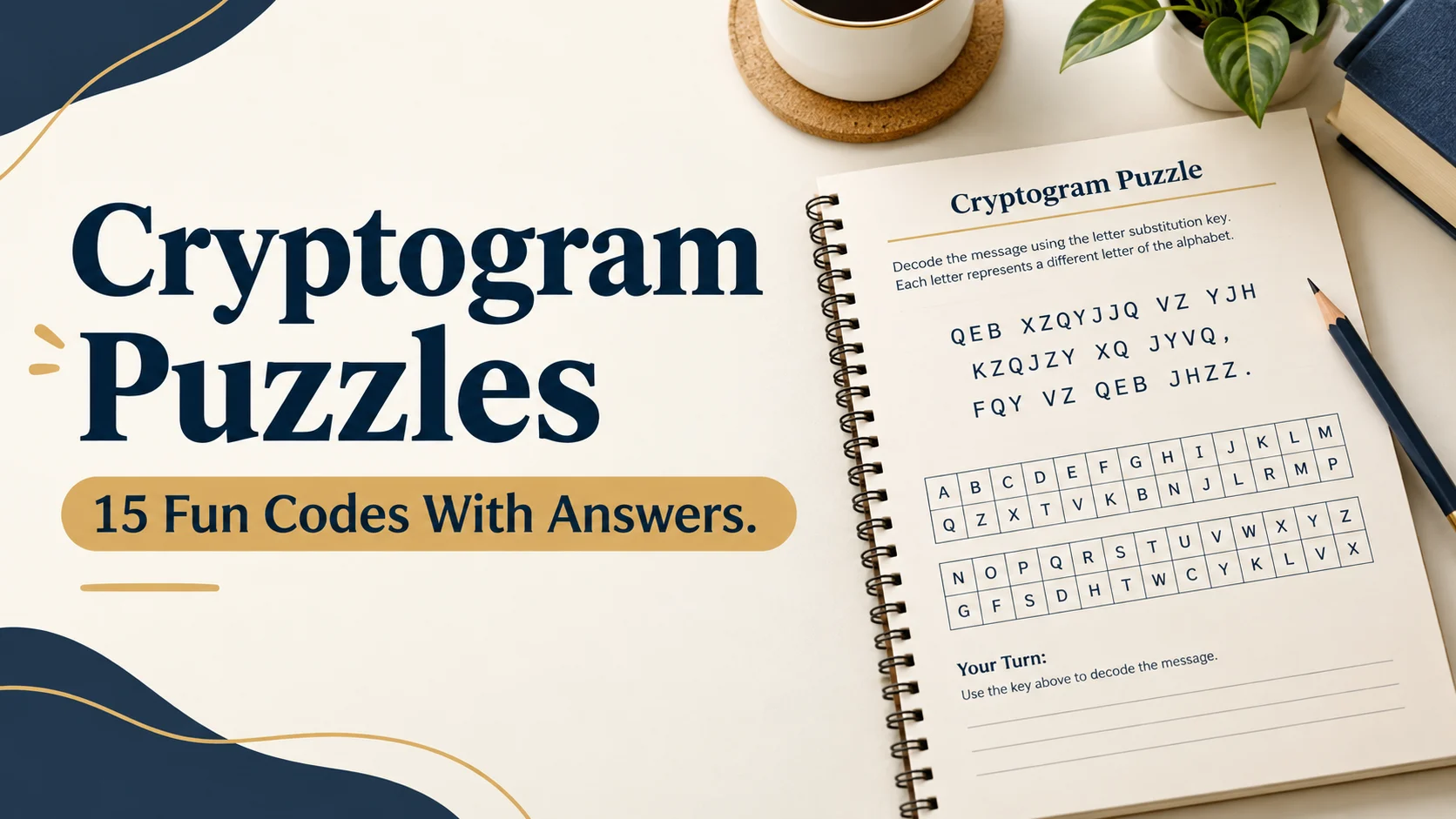
Cryptogram puzzles are word games in which each letter in a message is replaced by another letter using a consistent substitution rule. To solve them, look for short words, repeated letters, common letter patterns, and familiar English words. These 15 cryptogram puzzles include hints, solutions, and explanations for beginners and experienced puzzle fans.
Cryptogram puzzles turn ordinary sentences into secret messages. Each letter stands for another letter, and your job is to discover the hidden message by identifying the substitution pattern.
For example, a coded message might replace every A with Q, every B with M, and every C with J. The same substitution applies throughout that puzzle, so once you discover a letter’s meaning, you can use it everywhere it appears.
Unlike a simple riddle, a cryptogram tests your ability to recognize language patterns. Single-letter words, repeated letters, common words, and familiar sentence structures all provide clues.
This collection contains 15 original coded messages arranged from easy to hard. Try each puzzle before checking its hint or answer. You can solve them alone, challenge a friend, or use them as a fun family word-game activity.
How to Solve a Cryptogram
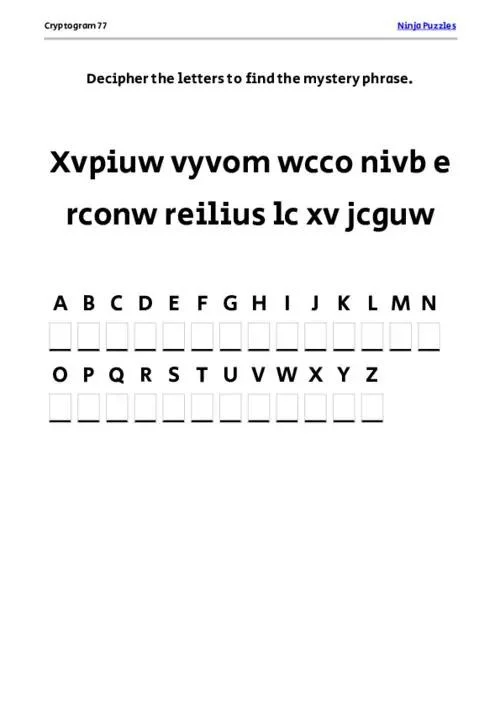
1. Find short words
A one-letter English word is usually “A” or “I.” Two-letter words such as “to,” “of,” “is,” and “in” can also provide useful clues.
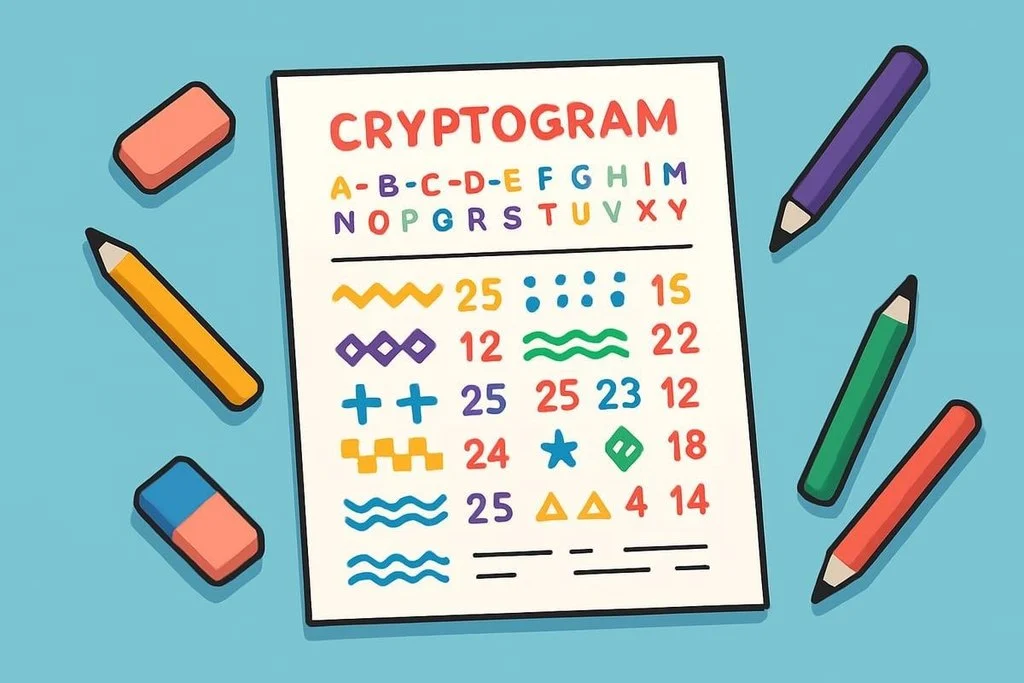
2. Examine repeated letters
If a coded word contains two identical letters in a row, the decoded word must have the same repeated-letter pattern.
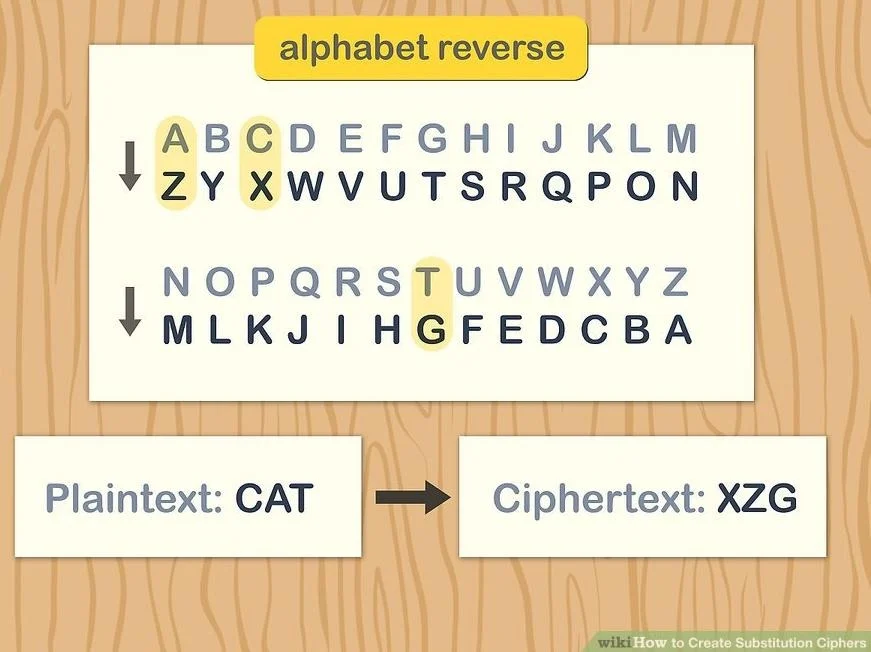
3. Test possible substitutions
Write your guesses above the coded letters. A substitution must remain consistent everywhere the same coded letter appears.
4. Check the whole sentence
A good solution should produce readable words throughout the message, not just one word that seems to fit.
15 Cryptogram Puzzles to Solve
How to play: Each coded message uses one consistent letter-substitution alphabet. Spaces and punctuation remain unchanged. The puzzles use the same substitution rule throughout this collection, so a letter you decode in one puzzle will have the same meaning in the others.
Try solving the messages before opening the answers.
Your cryptogram challenge
15 puzzles · Easy to hard
0/15
Solved
Reveal all solutionsReset
Puzzle 1 Small Steps
Difficulty: Easy
Easy
DECODE THIS MESSAGE
YBQSS YETNY JQO STQZ EX MPF JKQOFTY
Show hint, reveal answer. Mark solved
Puzzle 2 Keys to Words
Difficulty: Easy
Easy
DECODE THIS MESSAGE
IXRZY QRT LTDY EKQE XNTO OTI ZXXRY
Show hint, reveal answer. Mark solved
Puzzle 3 Learning From Errors
Difficulty: Easy
Easy
DECODE THIS MESSAGE
THTRD BPYEQLT JQO ETQJK Q STYYXO
Show hint, reveal answer. Mark solved
Puzzle 4 Spot the Pattern
Difficulty: Medium
Medium
DECODE THIS MESSAGE
SXXL GXR NQEETROY MTGXRT FVTYYPOF
Show hint, reveal answer. Mark solved
Puzzle 5 Quiet Observation
Difficulty: Easy
Easy
DECODE THIS MESSAGE
CVPTE BPOZY XGETO OXEPJT BXRT
Show hintReveal answerMark solved
Puzzle 6 Better Questions
Difficulty: Medium
Medium
DECODE THIS MESSAGE
FXXZ CVTYEPXOY STQZ EX MTEETR QOYITRY
Show hintReveal answerMark solved
Puzzle 7 Start With the Short Words
Difficulty: Easy
Easy
DECODE THIS MESSAGE
RTQZ EKT YKXRE IXRZY GPRYE
Show hintReveal answerMark solved
Puzzle 8 A Hidden Clue
Difficulty: Medium
Medium
DECODE THIS MESSAGE
RTNTQETZ STEETRY JQO RTHTQS Q JSVT
Show hintReveal answerMark solved
Puzzle 9 Patience Pays
Difficulty: Medium
Medium
DECODE THIS MESSAGE
EPBT QOZ NQEPTOJT KTSN YXSHT JXZTY
Show hintReveal answerMark solved
Puzzle 10 First Guesses
Difficulty: Medium
Medium
DECODE THIS MESSAGE
EKT GPRYE FVTYY PY OXE QSIQDY RPFKE
Show hintReveal answerMark solved
Puzzle 11 Think Carefully
Difficulty: Hard
Hard
DECODE THIS MESSAGE
JQRTGVS EKPOLPOF MTQEY RQOZXB FVTYYPOF
Show hintReveal answerMark solved
Puzzle 12 Unlock the Message
Difficulty: Hard
Hard
DECODE THIS MESSAGE
Q JSTQR JSVT JQO VOSXJL Q KQRZ BTYYQFT
Show hintReveal answerMark solved
Puzzle 13 Check Every Letter
Difficulty: Hard
Hard
DECODE THIS MESSAGE
IKTO XOT STEETR GPEY JKTJL PE THTRDIKTRT
Show hintReveal answerMark solved
Puzzle 14 A Complete Solution
Difficulty: Hard
Hard
DECODE THIS MESSAGE
EKT MTYE YXSVEPXO BQLTY THTRD IXRZ BQLT YTOYT
Show hintReveal answerMark solved
Puzzle 15 The Final Challenge
Difficulty: Hard
Hard
DECODE THIS MESSAGE
GXSSXI EKT STEETRY QOZ STE EKT BTYYQFT TBTRFT
Show hintReveal answerMark solved
Tips for Solving Harder Cryptograms
When an easy cryptogram becomes a challenge, stop guessing whole words and start looking for evidence.
- Use word length: A three-letter coded word could be “the,” “and,” “you,” or another common word. Test possibilities against neighboring words.
- Look for double letters: Patterns such as _ _ with the same letter repeated can narrow the options.
- Track every substitution: If a cipher letter represents E, it must represent E everywhere in that puzzle.
- Check common endings: Letter combinations such as -ING and -ED can help when the word pattern supports them.
- Reject contradictions: If a guess makes another word impossible, reconsider the guess rather than forcing the sentence to fit.
- Read the completed message: The final sentence should be grammatical and consistent with every substitution.
Important: In a standard monoalphabetic substitution cryptogram, different plaintext letters map to different cipher letters. Do not assign the same decoded letter to two different cipher letters within one puzzle.
Can You Beat the Challenge?
Try the puzzles without hints first, then reveal only the solutions you need. For a friendly competition, give each player the same three messages and compare how many they solve correctly.
You can make the game more challenging by setting a time limit, covering the answer key, or asking players to explain which clues helped them decode a sentence.
Remember that a good cryptogram is not about making random guesses. It is about using patterns, checking assumptions, and finding a solution that makes every letter fit.
FAQs
What is a cryptogram puzzle?
A cryptogram puzzle is a word game in which letters in a message are replaced according to a substitution rule. The solver uses word patterns, letter frequency, and context to recover the original message.
How do you solve cryptogram puzzles?
Start with short words, repeated letters, and familiar English patterns. Test possible letter substitutions, record each discovery, and apply it consistently. Check the entire sentence before accepting a solution.
Are cryptogram puzzles good for beginners?
Yes. Beginner cryptograms usually contain short sentences, familiar vocabulary, and recognizable word patterns. Starting with easy puzzles helps new solvers learn substitution rules before progressing to longer and more challenging messages.
Are cryptogram puzzles the same as cryptoquotes?
They are closely related. A cryptoquote is typically a quotation encoded with a letter-substitution cipher, while cryptograms can contain quotations, original sentences, jokes, or other hidden messages.
Can I print these cryptogram puzzles?
Yes. You can copy the coded messages into a document and print them as a worksheet. For a useful printout, place the puzzles on the first page and the answers on a separate page so solvers can avoid spoilers.
What is the difference between a cryptogram and a Caesar cipher?
A Caesar cipher shifts every letter by a fixed number of positions in the alphabet. A cryptogram is a broader puzzle format that often uses a general letter-substitution cipher, which may replace letters according to a more complicated mapping.
Are cryptogram puzzles suitable for adults?
Absolutely. Cryptograms can be made more challenging by using longer messages, less familiar vocabulary, fewer obvious patterns, or more complex language. Difficulty depends on the message and its clues rather than the solver’s age.
Do cryptogram puzzles have only one answer?
A properly constructed cryptogram with a defined substitution rule should have a consistent solution. However, short or ambiguous messages may allow multiple plausible interpretations, so good puzzle writing includes enough context to support the intended answer.
Conclusion
Cryptogram puzzles offer a satisfying mix of language, logic, and discovery. Whether you are solving your first coded sentence or working through a harder challenge, the best strategy is to examine short words, notice repeated patterns, and test every substitution carefully.
Use these 15 puzzles to practice at your own pace, share a favorite challenge with a friend, or turn solving into a family game. Once you understand the basic method, you can explore more advanced substitution ciphers, printable codebreaking worksheets, and other word puzzles. The next hidden message may be easier to crack than it first appears.

Ethan Brooks is a puzzle enthusiast and writer at PuzzleNexa.com, creating fun riddles, brain teasers and logic puzzles designed to challenge minds and spark curiosity.